If you’re wondering about the Chase freedom unlimited credit score you need before applying, the short answer is that good credit usually gives you the strongest shot. At the same time, interest around Chase slate edge still remains high, especially among people looking for balance transfer options or a safer path into the Chase ecosystem. The key thing to understand is that approval doesn’t depend on one number alone. Your score matters, but so do your recent accounts, your credit history, and whether you can find a Chase pre approval offer before you submit an application.
The Magic Number: What is the Chase Freedom Unlimited Credit Score?
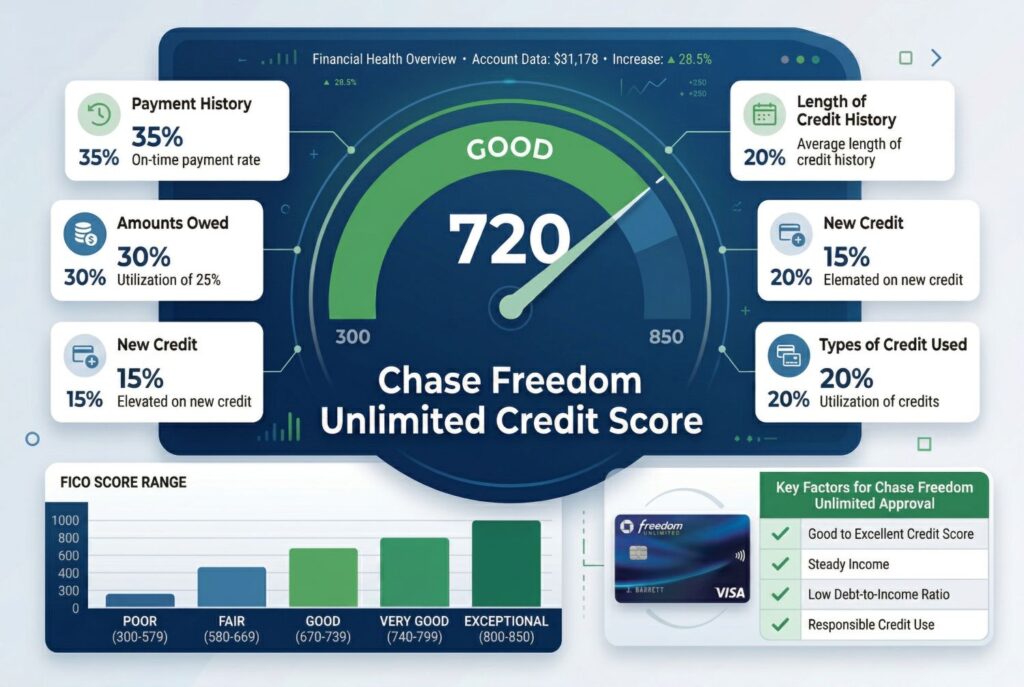
Let’s get straight to the point. For most applicants, the Chase freedom unlimited credit score range that makes the most sense is 670 and up. That puts you in the good to excellent credit category, which is generally where Chase likes to see applicants for this card.
Still, a 670 Chase credit score isn’t a guaranteed approval line. It simply means you’re within a range where approval becomes realistic. If you want a more comfortable margin, a score above 700 is the safer target. That gives your application more breathing room, especially if other parts of your profile aren’t perfect.
Why isn’t 670 enough by itself? Because Chase doesn’t just look at whether your score clears a minimum threshold. A person with a 675 score, a long credit history, low balances, and no recent application spree may look stronger than someone with a 720 score but a thin file and high utilization. So when people ask about the Chase freedom unlimited credit score, the smartest answer is this: aim for 670+, but 700+ is a much better safe zone.
Chase Slate Edge Tips: Important 2026 Update & Requirements

There has been an important update around Chase slate edge that many people still miss. The card is no longer accepting new applicants as of February 2026. That means if you’re actively searching for a Chase slate edge, you shouldn’t treat it like an open application option right now.
Before it stopped taking new applications, Chase slate edge was commonly associated with a recommended credit range of about 670 to 850. In other words, applicants usually needed at least good credit to be competitive. That made sense because the card appealed to people who wanted balance transfer flexibility and lower-interest breathing room.
So what should you do if you were specifically looking for a Chase slate edge? Focus on the purpose behind the search. If your goal is balance transfer, debt payoff, or a no-annual-fee option to stabilize utilization, then you should compare currently available alternatives that fit that use case. The better strategy isn’t to chase a closed product. It’s to match your profile and your debt payoff plan with an available card that serves the same function.
The “Hidden” Chase Credit Score Rules: It’s Not Just About the 670+
A lot of people think approval is mostly about the Chase credit score. It isn’t. Your score is only part of the picture. Chase also looks at your overall credit behavior, and that can make or break an application even when your score looks good on paper.
The Dreaded Chase 5/24 Rule
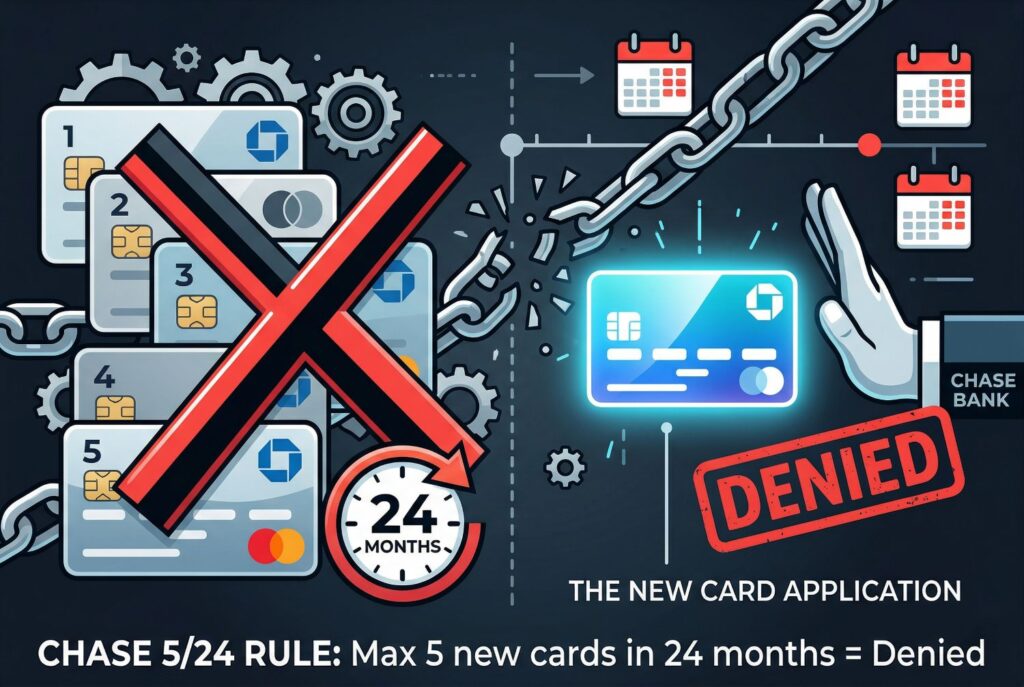
One of the biggest unwritten factors is the 5/24 rule. In simple terms, if you’ve opened five or more credit cards across any issuers in the past 24 months, Chase may deny your application even if your score is excellent.
This is why the Chase freedom unlimited credit score discussion can be misleading when taken out of context. Someone could have an 800 score and still get rejected because they crossed 5/24. That’s also why serious applicants should review their recent card history before doing anything else. If you’re over the limit, waiting may be smarter than applying now.
Credit History and Utilization
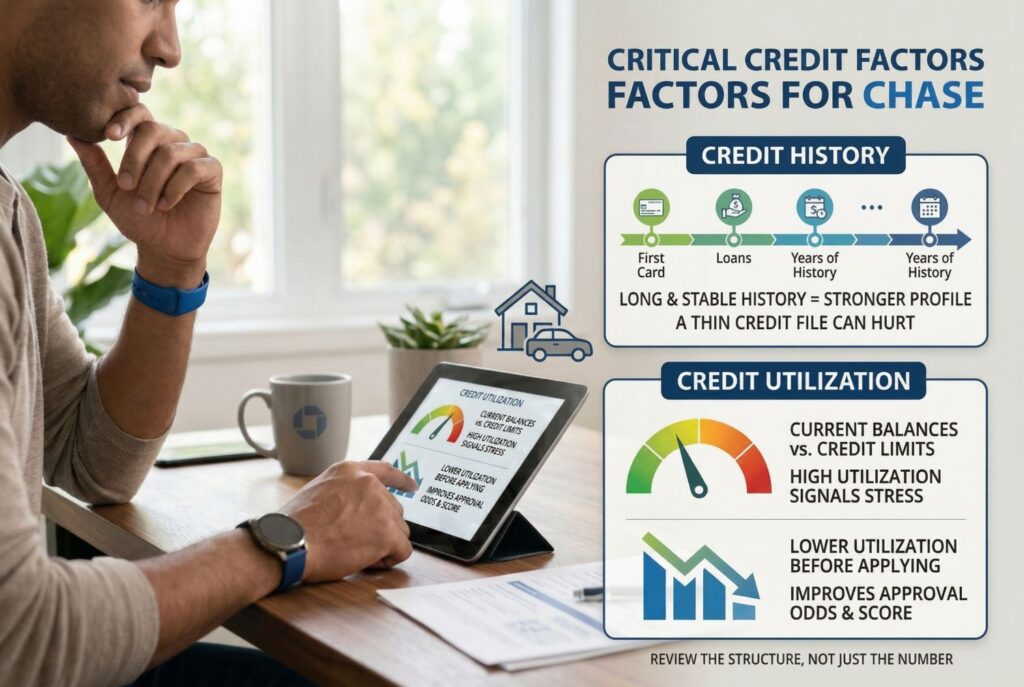
Chase also pays attention to how long you’ve had credit and how heavily you’re using it. A thin credit file can hurt you even when your score looks decent. High utilization can do the same. If your current balances are too close to your credit limits, your profile may appear stressed. Lowering utilization before you apply can improve both your score and your overall approval odds. Likewise, a longer and more stable history makes your application stronger. So when reviewing your Chase credit score, don’t stop at the number. Look at the structure underneath it.
How to Get a Chase Pre Approval Before Applying
If you want to reduce risk before applying, checking for a Chase pre approval is one of the smartest moves you can make. Many applicants worry about submitting a full application and taking a hard inquiry without knowing whether they have a realistic shot.
That’s where Chase pre approval tools and offer checks can help. In general, reviewing pre-qualified or pre-approved offers is based on a soft pull, which means it doesn’t damage your score the way a hard inquiry can. For cautious applicants, this is a much safer first step.
You should also search for Chase credit card pre approval options before moving ahead with a formal application. A Chase credit card pre approval result doesn’t guarantee final approval, but it can give you a stronger signal that your profile fits what Chase is looking for. Think of it as a filter. It won’t promise a yes, but it may help you avoid a poorly timed application.
Ready for Premium? The Chase Sapphire Preferred Credit Score
Once your profile gets stronger, you may start thinking beyond Freedom Unlimited. That’s where the Chase sapphire preferred credit score becomes relevant. In general, this card is aimed at applicants with stronger credit, and many people feel more comfortable applying once their score is above 700.
Compared with Freedom Unlimited, the Chase sapphire preferred credit score expectation is usually a bit higher because the product sits in a more premium tier. If Freedom Unlimited is a practical next step for someone building toward better rewards and stronger approval odds, Sapphire Preferred is often the card people consider once their file looks more polished.
So if you’re already at 700+, have low utilization, and aren’t over 5/24, the premium route may start making sense. But if your profile is still borderline, Freedom Unlimited is often the more logical first move.
Conclusion

Here’s the clearest plan if you want the best shot at approval. First, check your 5/24 status. Second, make sure your Chase freedom unlimited credit score is at least 670, with 700+ as the safer goal. Third, review your utilization and credit history so your profile looks stable. Fourth, look for a Chase pre approval or Chase credit card pre approval offer before submitting a full application. Finally, apply for the card that truly fits your situation.
If you were looking at Chase slate edge, remember that the card isn’t open to new applicants anymore, so your best move is to focus on available alternatives that match your balance transfer or debt payoff goals. And if your credit profile is already strong, the Chase sapphire preferred credit score benchmark may be your sign that you’re ready to move into a more premium Chase product. The smartest applicants don’t just ask, “What’s my Chase credit score?” They ask whether their full credit profile is ready. That’s the difference between applying hopefully and applying strategically.