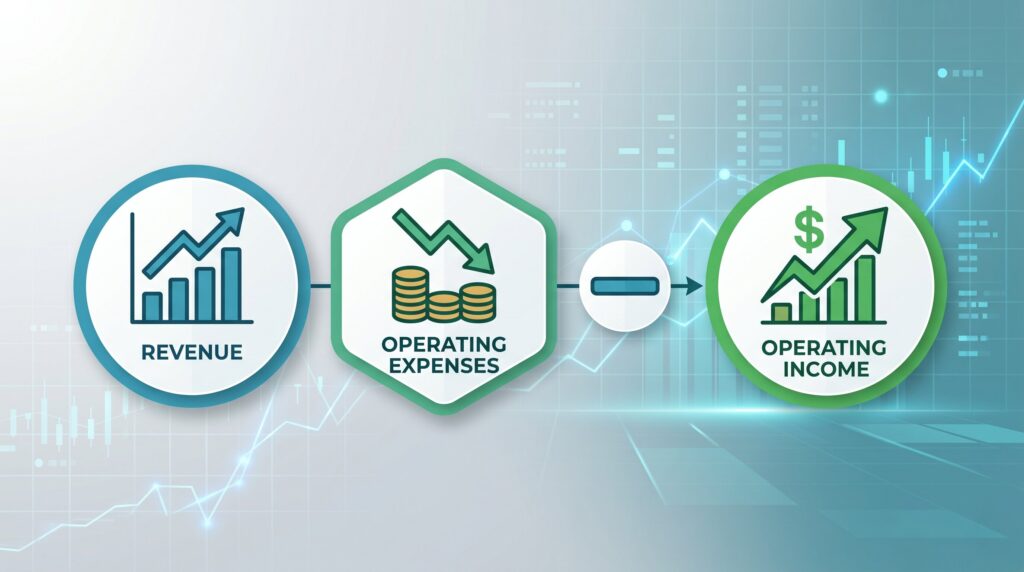
If you want to know whether your business model is actually working, one of the best numbers to track is operating income. A lot of business owners look at revenue first and net income last, but the number in the middle often tells the clearest story. What is operating income? It’s the profit left after subtracting the costs of running the business, but before interest and taxes. In plain English, it shows whether your core operations are healthy on their own.
That’s why operating income matters so much in 2026. Costs are still shifting, pricing pressure is real, and businesses need a cleaner way to judge performance than raw revenue alone. A company can grow sales and still get weaker if operating expenses rise too fast. Operating profit helps you see that problem earlier.
What Is Operating Income? The Definition
Operating income is the profit a business earns from its normal operations after subtracting both direct costs and operating expenses, but before accounting for interest and taxes. It’s often also called operating profit.
That definition matters because it isolates the business core. It strips away financing choices and tax structure so you can focus on how well the actual operation is performing. In other words, operating income meaning is tied to business efficiency, not just final accounting outcomes.
This is what makes it so useful. If your operating income is strong, your core business may be healthy even if net income looks messy because of debt, tax timing, or one time items. If operating income is weak, the business may have deeper structural problems even if revenue still looks impressive.
The Operating Income Formula: Step by Step Calculation
The operating income formula can be shown in two useful ways.
The top down version is:
Operating Income = Gross Profit − Operating Expenses
The more detailed version looks like this:
Operating Income = Revenue − COGS minus wages – rent minus utilities − depreciation
Both are valid. They simply start from different places on the income statement. If you’re wondering how to calculate operating income, the key is understanding what belongs in the formula. Revenue comes first. Then you subtract the cost of goods sold, which gives you gross profit. After that, you subtract operating expenses such as selling, general, and administrative costs, payroll not included in COGS, rent, utilities, depreciation, and other ongoing business expenses. The result is operating profit.

One reason this formula is so useful is that it makes the layers of profitability easier to see. Revenue alone tells you what came in. Gross profit tells you what remains after direct costs. Operating income tells you what remains after the actual business machine has done its work.
Operating Income vs. Net Income: Which One Matters More?
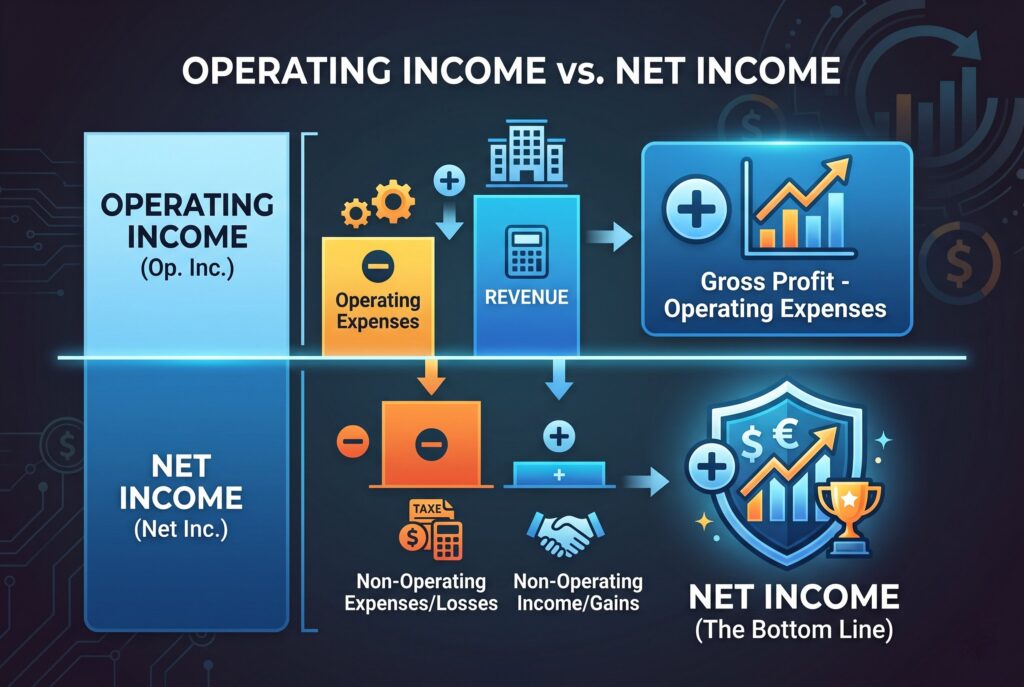
This is one of the most common sources of confusion. Operating income vs net income isn’t really a battle between two competing metrics. They answer different questions. Operating income shows how efficient your business operations are before interest and taxes. Net income shows what is left after everything, including financing costs and taxes, has been deducted.
So which one matters more? For judging the strength of the business model itself, operating income is often more revealing. It shows whether the company is generating profit from actual operations. For judging the final amount the business keeps, net income matters more.
This is why a company can have positive operating income but negative net income and still be worth taking seriously. Maybe it’s carrying debt from expansion. Maybe tax timing hurt the period. Maybe there were one time financing costs. The core business may still be working just fine. That’s also why relying only on net income can sometimes hide the real story. Operating profit gives you a cleaner view of day to day performance.
Analyzing Efficiency With Operating Margin

Once you understand operating income, the next step is operating margin. What is the operating margin? It’s the percentage of revenue that remains as operating income after all operating costs have been subtracted. It turns the dollar amount into an efficiency ratio that is easier to compare across time and across businesses.
The operating margin formula is:
If you want the operating profit margin formula as a percentage, multiply that result by 100. This matters because dollar figures alone can mislead. A larger company may have higher operating income in absolute terms but worse efficiency. Operating margin helps normalize that. It shows how much operating profit the business keeps from each dollar of revenue.
In an inflationary or volatile year, a healthy operating margin becomes especially important. It gives a business more room to absorb cost shocks, defend pricing, and keep investing when weaker competitors start struggling.
3 Strategies to Improve Your Operating Income in 2026
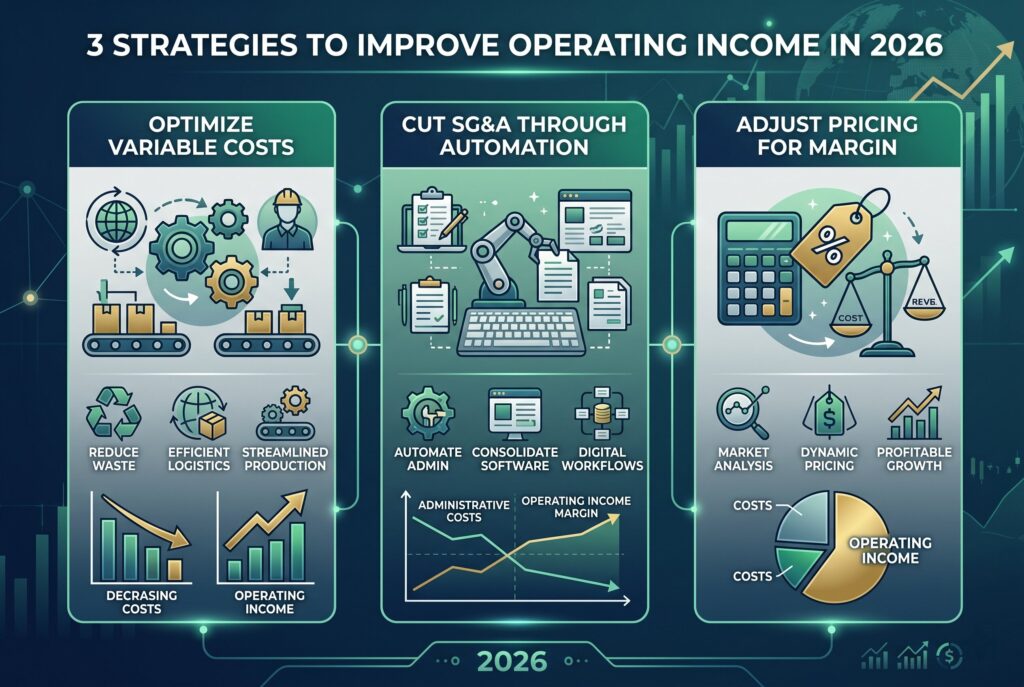
1. Optimize Variable Costs
If direct costs are creeping up, operating income gets squeezed fast. Look closely at suppliers, inventory waste, fulfillment, and labor efficiency. Small improvements in variable costs can create meaningful gains in operating profit without requiring higher sales.
2. Cut Unnecessary SG&A through Automation
Selling, general, and administrative expenses often expand quietly over time. Software sprawl, manual admin work, and duplicated processes can drag down operating income without adding real value. In 2026, automation is one of the clearest ways to protect margin while keeping service levels steady.
3. Adjust Pricing Based on Operating Margin
A lot of businesses are slow to revisit pricing, even when costs rise. If revenue is growing but operating income is falling, the problem may not be demand. It may be pricing discipline. Reviewing pricing with operating margin in mind helps you see whether growth is actually profitable growth.
Conclusion

Operating income is one of the clearest ways to judge whether your business is truly working. It tells you how much profit your core operation produces before financing and tax noise distort the picture. That makes it more useful than revenue alone and, in some situations, more revealing than net income.
If you want a stronger business in 2026, don’t just track sales. Track operating profit every month. Watch operating margin alongside it. That combination gives you a much sharper view of cost control, pricing discipline, and real business health.