


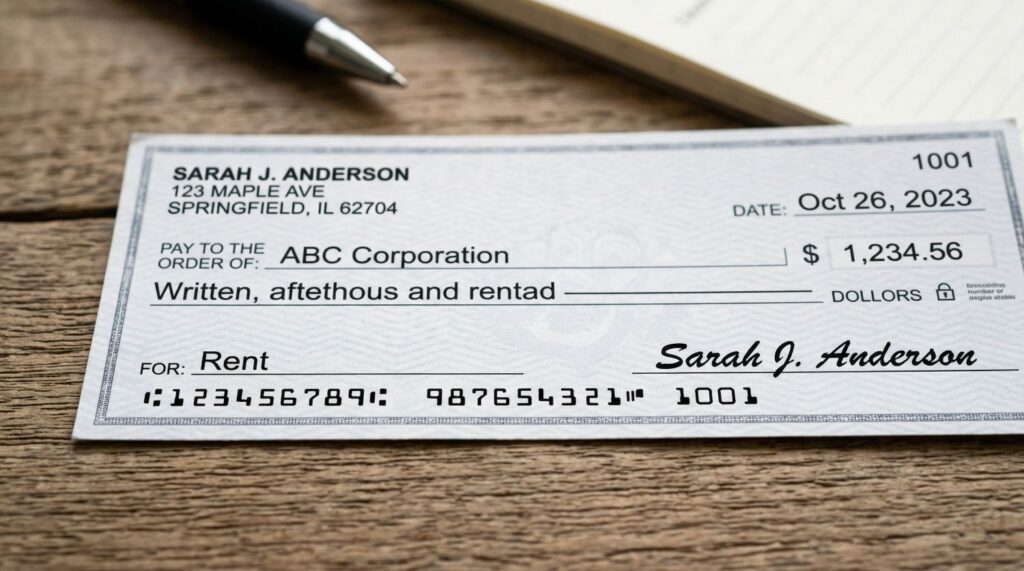
If you’re wondering where the account number on a check is, the fastest answer is this: the account number on check is usually the middle set of numbers at the bottom. That bottom row is called the MICR line, and it contains the routing and account number on check layouts that banks use for direct deposit, bill pay, ACH transfers, and other financial tasks.
Most people searching this don’t need a history lesson on paper checks. They just want the right number so they can fill out a form correctly. Once you know how the bottom line works, the rest becomes much easier.
Decoding the 3 Numbers on a Check
The numbers on a check are printed in a specific order so banks can read them quickly and accurately. In most personal checks, you’ll see three sections along the bottom line.
The first section on the left is usually the routing number. The second section is usually the account number. The third section is usually the check number. That standard layout is what most people mean when they talk about routing and account number on check details.
1. The Routing Number
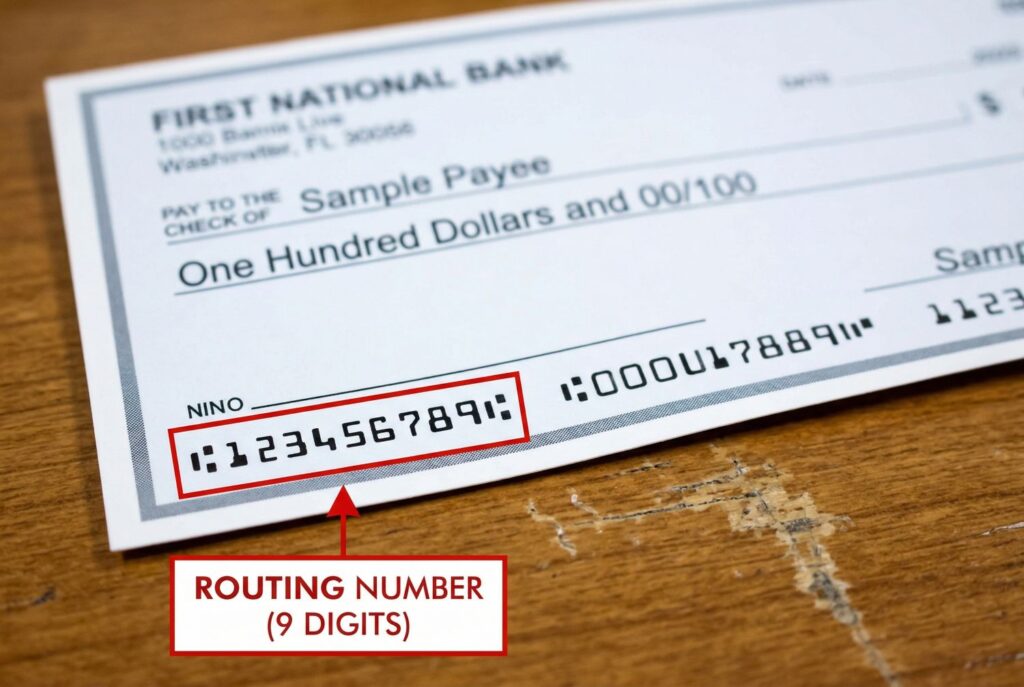
The routing number is the first group of digits on the left side of the MICR line. It’s always nine digits long and identifies the bank or credit union. Think of it as the bank’s address inside the payment system.
This number is public. It doesn’t point to your personal account. It only tells the payment network which bank should receive or send the funds. That’s why routing numbers are used for direct deposit, tax refunds, ACH transfers, and online payments. If you’re ever unsure which number is the routing number, look for the first nine-digit group at the bottom. That part usually stays consistent even when the rest of the layout changes a little.
2. Where Is the Account Number on a Check?
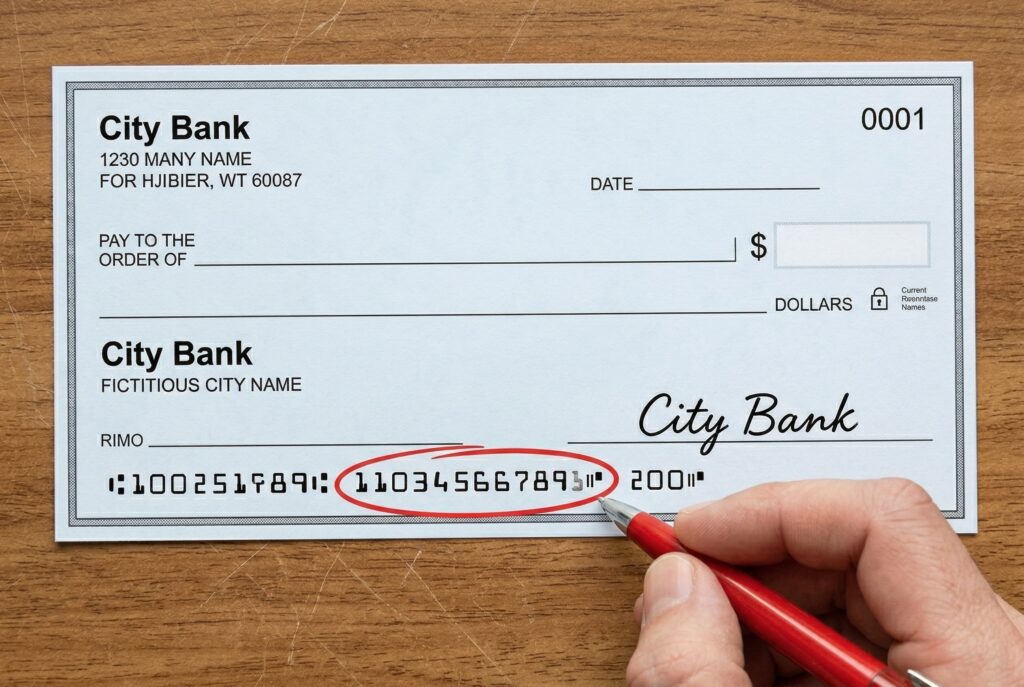
This is the part most people need most. Where is the account number on a check? In most cases, it’s the second group of numbers in the MICR line, right after the routing number.
So what is the account number on a check? It’s the number tied to your personal checking account. Unlike the routing number, this one is private. It’s the key identifier for your actual bank account, which means it should be treated more carefully. If you’re filling out a payroll form, linking a bank account to an app, or setting up automatic payments, this is usually the number the form is asking for. That’s why it matters so much to get it right.
There’s one important edge case to know. Depending on the bank’s printing format, the account number and check number can sometimes switch places. But the routing number is still first. So if you see a nine-digit number on the far left, start there. Then identify the remaining two number groups carefully.
3. The Check Number
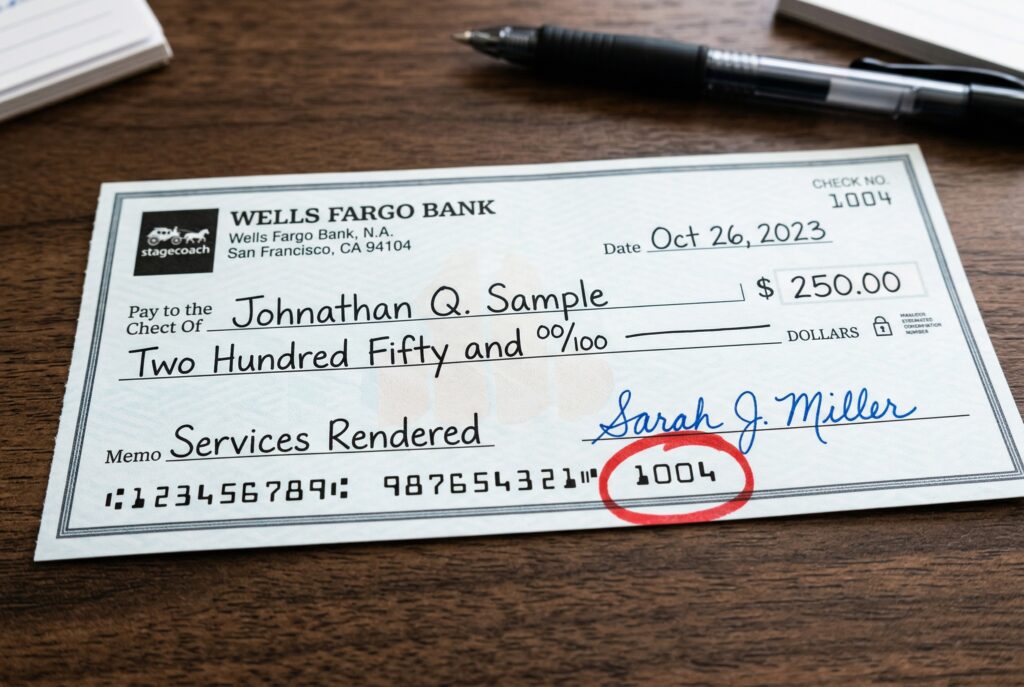
The check number is the last group of digits on the bottom line in most layouts. It’s used for tracking that specific check. You’ll also usually find the same number in the upper right corner of the check. This number doesn’t identify your bank or account. It identifies the individual check itself. That’s helpful for recordkeeping, reconciliation, and spotting potential fraud.
Account Number vs. Debit Card Number
One of the most common mistakes people make is confusing their account number with their debit card number. These aren’t the same thing.
Your debit card number is the long 16-digit number printed across the front of the card. Your account number is usually shorter and appears on your check or in your online banking details. If a direct deposit or ACH form asks for your bank account number, don’t enter your debit card number by mistake. This mix-up causes failed setup forms all the time. The card number is tied to your payment card. The account number is tied to your checking account. They serve different purposes, and they can’t be swapped.
How to Find Your Account Number Without a Paper Check
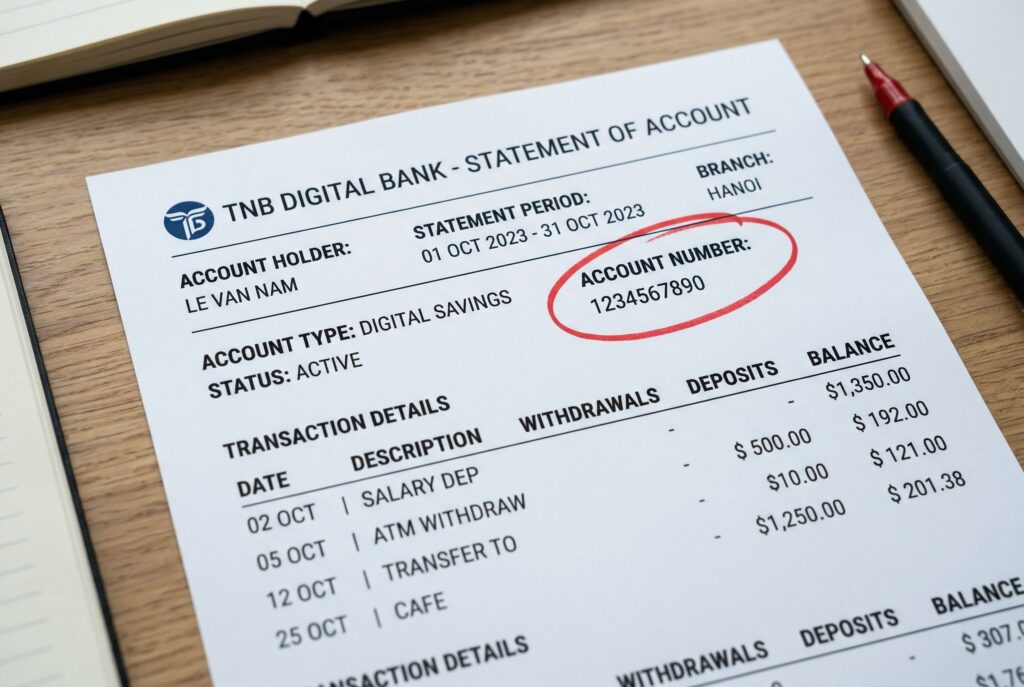
A lot of people don’t even have a checkbook anymore, so they need another way to find where is account number on the checkout information. The good news is that you can usually find it digitally. Inside your mobile banking app, look for your checking account details or direct deposit section.
On a digital bank statement, the account number often appears near the top, though some banks mask part of it for security. Via the online banking web portal, you can usually open the account details page and view both routing and account information there.
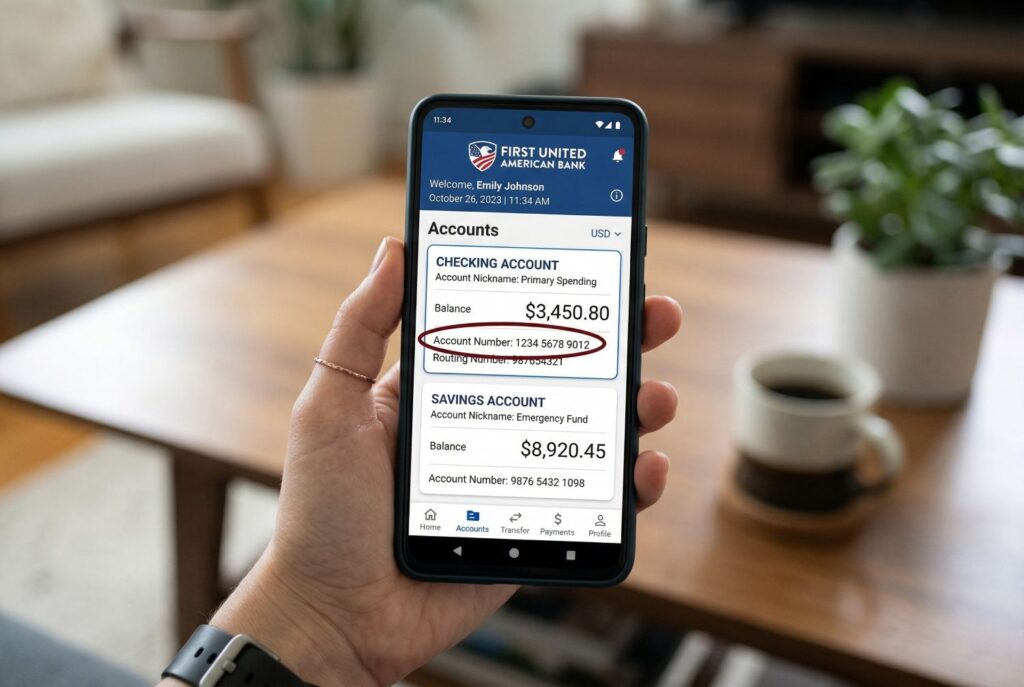
This matters because modern banking is increasingly digital. People may still search using check-related terms, but what they often need is information for online payments, direct deposit, or account linking.
Security Warning: Keep This Number Private
Your routing number is public. Your account number isn’t. That’s the easiest security rule to remember. The routing number only identifies the bank. The account number identifies your actual account and can be used in payment setups. That’s why you shouldn’t share it casually or leave it exposed in screenshots, messages, or unsecured forms.
Avoid sending your account number over unencrypted texts or email when possible. Don’t enter it while using public Wi-Fi unless you’re on a secure banking app or trusted encrypted website. If you print statements or keep old checks, shred them before throwing them away.
You should also monitor your account regularly. If you think your account number has been exposed, review your transactions, enable alerts, and contact your bank quickly if anything looks unfamiliar. Fast action matters more than panic. The same rule applies when storing information for convenience. A secure password manager or protected banking app is much safer than writing sensitive details into random notes or screenshots on your phone.

Conclusion
If you needed the quick answer, here it is again: where is the account number on a check? It’s usually the middle number group at the bottom, between the routing number and the check number. That’s the standard place to find the account number on check layouts, even though a few formats may swap the final two groups.
Once you understand the numbers on a check, setting up direct deposit, bill payments, and account links becomes much simpler. The routing number points to the bank, the account number points to your account, and the check number tracks the individual check. Knowing that difference helps you complete forms correctly and manage your banking information more safely.
Related Articles
How to Read a Check: The Easiest Way to Find Your Routing and Account Number

