
Low risk investments are designed for one main purpose: protecting your money while still earning a reasonable return. They are ideal for emergency funds, house down payments, wedding savings, tax reserves, or any goal where you can’t afford a sudden market loss.
But “safe” doesn’t mean “risk-free.” If you avoid stock market risk completely, you may still face inflation risk. That means your dollars stay in the account, but their buying power slowly shrinks.
The best low risk investments balance three things: safety, liquidity, and yield. If you want to learn how to make your money work for you without losing sleep, these safe investments can help you earn steady income while keeping your principal protected.
Ultra-Safe Cash Equivalents
1. High-Yield Savings Accounts
High-yield savings accounts (HYSAs) are often the first stop for money that needs to remain accessible while still earning a competitive return. Unlike traditional savings accounts that may pay negligible interest, many online banks offer significantly higher yields because they operate with lower overhead costs.
For most households, an HYSA serves a practical purpose rather than an investment purpose. Emergency funds, upcoming tax payments, vacation savings, and home-repair reserves are common examples. The money remains available when needed, yet continues earning interest while it sits idle.
Another advantage is simplicity. Deposits held at FDIC-insured banks are protected up to applicable limits, eliminating many of the risks associated with market-based investments. There is no need to monitor bond prices, stock market fluctuations, or maturity dates. The primary drawback is inflation risk. While HYSAs can outperform traditional savings accounts, long-term inflation may still exceed the interest earned. For that reason, they work best as a liquidity tool rather than a long-term wealth-building vehicle.
2. Money Market Accounts
Money market accounts combine some of the flexibility of a checking account with the earning potential of a savings account. Many offer debit card access, check-writing privileges, or easier transfers, which can make them useful for cash that may need to be spent without delay.
These accounts can work well for short-term savings goals such as property taxes, insurance premiums, home repairs, or a down payment fund. The money remains separate from everyday checking, but still accessible enough to use when the bill comes due.
The tradeoff is that the best rates may require a higher balance, and some accounts may charge fees or limit certain types of transactions. Insurance coverage also matters. A money market account at an FDIC-insured bank or NCUA-insured credit union is different from a money market mutual fund held in a brokerage account. A money market account is most useful when you want safety, yield, and spending flexibility in the same place.
3. Money Market Mutual Funds
Money market mutual funds are often used inside brokerage accounts as a place to hold cash while waiting to invest. These funds typically invest in short-term, high-quality instruments such as Treasury securities, government securities, commercial paper, or municipal debt, depending on the fund’s mandate. Fidelity notes that they can offer liquidity and diversification, but they aren’t FDIC or NCUA insured.
The advantage is convenience for investors who already use a brokerage account. Cash from dividends, stock sales, or new deposits can sit in a money market fund and earn a yield while remaining available for future trades or withdrawals.
The risk profile is still different from a bank account. The yield can move up or down as market rates change, and investors should read the fund’s details before treating it as a primary cash reserve. Some funds focus on government securities, while others may hold municipal or corporate short-term debt. Money market mutual funds are best for brokerage liquidity, not for money that absolutely requires bank-style insurance protection.
Government-Backed Fixed Income
4. U.S. Treasury Bills
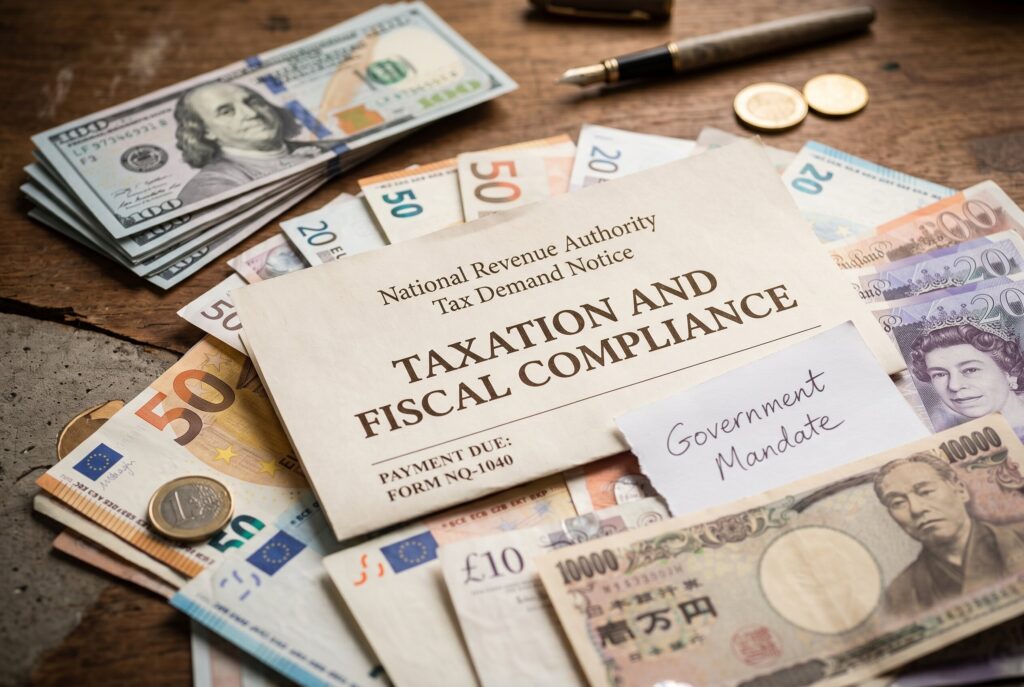
U.S. Treasury bills, commonly known as T-bills, are among the safest income-producing assets available because they are backed by the full faith and credit of the U.S. government. They are issued with maturities ranging from a few weeks to one year, making them particularly useful for investors who have a specific timeline for their cash.
Many investors use T-bills as an alternative to holding large balances in a savings account. During periods of elevated interest rates, T-bills can offer yields that compete with or exceed many bank products while maintaining a high degree of safety. Another benefit is tax efficiency. Interest earned on Treasury securities is generally exempt from state and local income taxes, which can improve after-tax returns for investors living in higher-tax jurisdictions.
Although T-bills are considered low risk, they are still designed for capital preservation rather than aggressive growth. Investors seeking long-term appreciation typically use them as a cash-management tool, a portfolio stabilizer, or a temporary place to park funds while waiting for future opportunities.
5. Treasury Inflation-Protected Securities
Treasury Inflation-Protected Securities, or TIPS, are designed to help investors protect purchasing power. Their principal adjusts with inflation or deflation based on the Consumer Price Index, while the interest rate itself remains fixed. Fidelity describes TIPS as Treasury securities that can help hedge inflation, although their interest rate is often lower than other Treasury securities.
TIPS can be useful when the goal isn’t just preserving dollars, but preserving what those dollars can buy. This makes them different from regular fixed-rate bonds, which may lose purchasing power when inflation rises faster than expected.
They aren’t perfect cash substitutes. If sold before maturity, their market value can rise or fall due to changes in real interest rates. They may also create tax considerations because inflation adjustments can be taxable in the year they occur, even if the investor doesn’t receive that adjustment as cash until maturity. TIPS fit best when inflation protection matters more than immediate liquidity.
6. Certificates of Deposit
Certificates of deposit offer a fixed rate for a fixed period, such as six months, one year, or several years. Fidelity notes that traditional CDs issued by FDIC-insured banks can provide reliable fixed-rate returns, but early withdrawals usually come with penalties.
The strength of a CD is predictability. You know the rate, the maturity date, and the amount of money that should be available if you hold the CD to maturity. That makes CDs useful for planned expenses such as tuition payments, a future car purchase, or a home project.
The weakness is flexibility. Locking money into a CD can become frustrating if rates rise after purchase or if you need the funds earlier than expected. A CD ladder can reduce that problem by spreading money across multiple maturities, giving you periodic access to cash while still earning fixed rates. CDs work best when the money has a clear purpose and a clear timeline.
Corporate and Municipal Stepping Stones

7. Short-Term Corporate Bond Funds
Short-term corporate bond funds invest in debt issued by companies, usually with maturities short enough to reduce interest-rate sensitivity compared with longer-term bond funds. They may offer more income than Treasuries or bank products because corporate borrowers generally pay higher yields to attract investors.
That higher yield comes with additional risk. Companies can face credit problems, and bond prices can move when interest rates, credit spreads, or market sentiment change. Even a short-term fund can lose value during periods of financial stress.
These funds can be useful for investors who want to move one step beyond cash equivalents without taking on stock-market volatility. They may fit the conservative income portion of a portfolio, especially for money that doesn’t need to be spent immediately. They shouldn’t be treated like emergency cash. The right mindset is income with moderate stability, not guaranteed principal. Investors should review the fund’s credit quality, duration, expenses, and yield before choosing one.
8. Municipal Bond Funds
Municipal bond funds invest in debt issued by states, cities, counties, and other local government entities. Their biggest appeal is tax efficiency. Interest from municipal bonds is often exempt from federal income tax, and in some cases may also be exempt from state income tax for residents of the issuing state.
This can make muni bond funds especially attractive for higher-income investors in higher tax brackets. A lower stated yield may become more competitive after taxes are considered.
The risk is that tax advantages don’t eliminate investment risk. Municipal bond funds can decline in value when interest rates rise, when credit conditions weaken, or when investors become concerned about the finances of certain issuers. Fund expenses and average maturity also matter because longer-duration funds can be more sensitive to rate changes.
Municipal bond funds are best evaluated on an after-tax basis. Compare them with Treasuries, CDs, and corporate bonds before deciding whether the tax benefit is actually worth the added complexity.
9. Multi-Year Guaranteed Annuities
Short-term corporate bond funds invest in debt issued by businesses with relatively near-term maturities. Because corporations generally pay higher borrowing costs than the U.S. government, these funds often generate higher yields than Treasury-based alternatives.
The tradeoff is additional risk. Even financially strong companies can face economic challenges, and changes in credit conditions can affect bond prices. While short-term maturities tend to reduce interest-rate sensitivity, they don’t eliminate the possibility of losses during periods of market stress.
These funds are often used by investors who want to move beyond cash-equivalent products without taking on the volatility associated with stocks. They can provide a middle ground between capital preservation and income generation.
A short-term corporate bond fund is usually most effective when viewed as part of a diversified fixed-income allocation rather than as a substitute for emergency savings. Investors should be comfortable holding through temporary price fluctuations in exchange for the potential for higher income.
Conclusion
The best low risk investments depend on when you need the money. Use HYSAs and money market accounts for immediate cash. Use T-bills or CDs for money needed within months or a few years. Use TIPS, short-term bond funds, municipal bonds, or MYGAs only when the timeline and risks make sense.
Safety isn’t just avoiding market volatility. It’s keeping enough liquidity, earning enough yield, and protecting your future purchasing power. Build your safety net in layers, and your money can stay steady while still working for you.