
A good no tax on overtime calculator should do more than give you a big, exciting number. It should help you understand what part of your overtime may qualify, how the deduction works, and why your paycheck may still show taxes even if you’re eligible for savings later. The new overtime tax deduction is valuable, but it’s often misunderstood. “No tax” doesn’t mean every overtime dollar is untouched. It usually means qualified overtime premium pay may reduce your federal taxable income when you file your return, subject to income limits and annual caps. For workers who depend on extra shifts, that difference matters.
Interactive Tool: 2026 Overtime Tax Savings Estimator
To estimate your deduction, use this simple formula:
Estimated federal savings = Qualified overtime premium × your estimated federal marginal tax rate
For example, if your qualified overtime premium is $4,000 and your marginal federal tax rate is 22%, your estimated federal savings could be about $880. That’s a useful estimate, not a guaranteed refund, because your final result depends on your full tax return. The deduction is capped at $12,500 for most filers and $25,000 for married couples filing jointly. It also begins phasing out when MAGI exceeds $150,000, or $300,000 for joint filers.
Overtime Tax Savings Estimator
How to Use the Overtime Tax Calculator
Start with your final paystub for the year. Look for year-to-date overtime pay, overtime hours, regular hourly rate, and overtime rate. If your employer separates the overtime premium, use that number. If not, you may need to calculate the premium manually.
For time-and-a-half overtime, the premium is the “extra half,” not the full overtime wage. If your regular rate is $20 and your overtime rate is $30, the qualified premium is generally $10 per overtime hour. Next, estimate your tax bracket. You don’t need perfect precision for planning. Use your approximate taxable income and filing status to choose a reasonable federal marginal rate. Then apply that rate to the deductible overtime premium, after considering the annual cap and phaseout. This is where an overtime tax calculator becomes useful: it turns confusing paystub numbers into a practical estimate.
The “No Tax on Overtime” Rule Explained (2026 Limits)
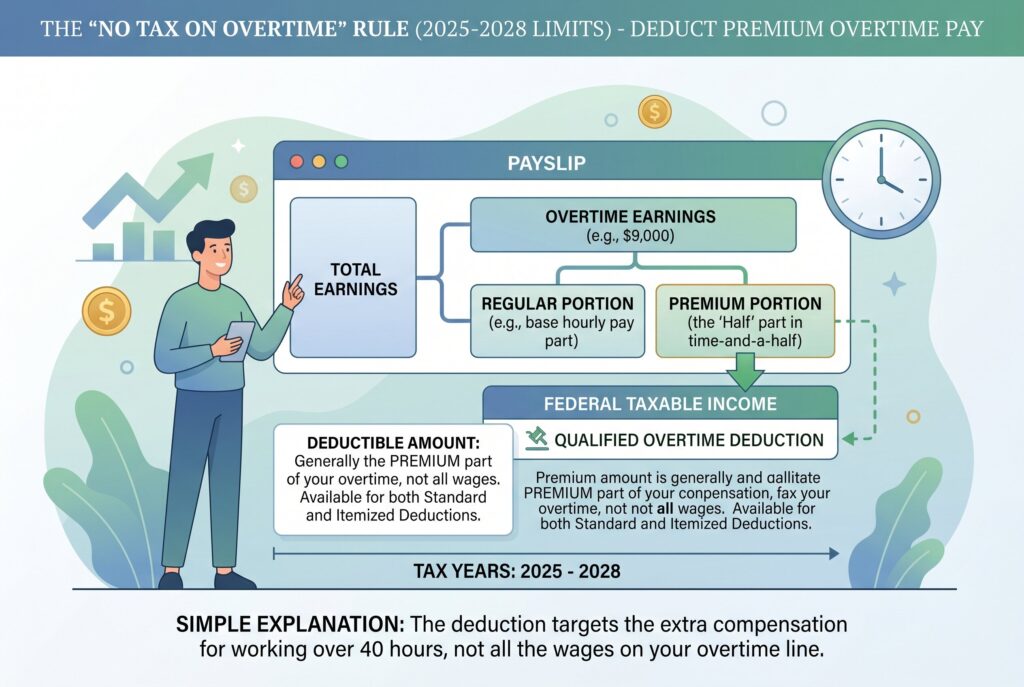
No tax on overtime explained correctly means this: eligible workers may deduct qualified overtime compensation from federal taxable income. The rule applies for tax years 2025 through 2028, and the deduction is available whether you itemize or take the standard deduction.
The phrase “qualified overtime” is important. The IRS describes qualified overtime compensation as the pay that exceeds your regular rate, generally the “half” portion of time-and-a-half pay. That means if your overtime line says $9,000, your deductible amount may be much smaller depending on how that overtime was calculated. The deduction isn’t designed to erase all overtime wages. It targets the premium portion.
The Truth: Is Overtime Still Taxed in 2026?
Yes, overtime can still be taxed. The better question is: which taxes still apply? Federal income tax may be reduced through the overtime tax deduction. But Social Security and Medicare taxes generally still apply. State income tax may also apply unless your state adopts similar treatment. Withholding can also continue during the year, because the benefit is often realized when you file your tax return. That’s why the answer to is overtime still taxed is: yes, but some qualified overtime may receive special federal income tax treatment. This distinction protects you from expecting a paycheck miracle that never arrives.
Paycheck vs. Tax Return: When Will You See the Money?
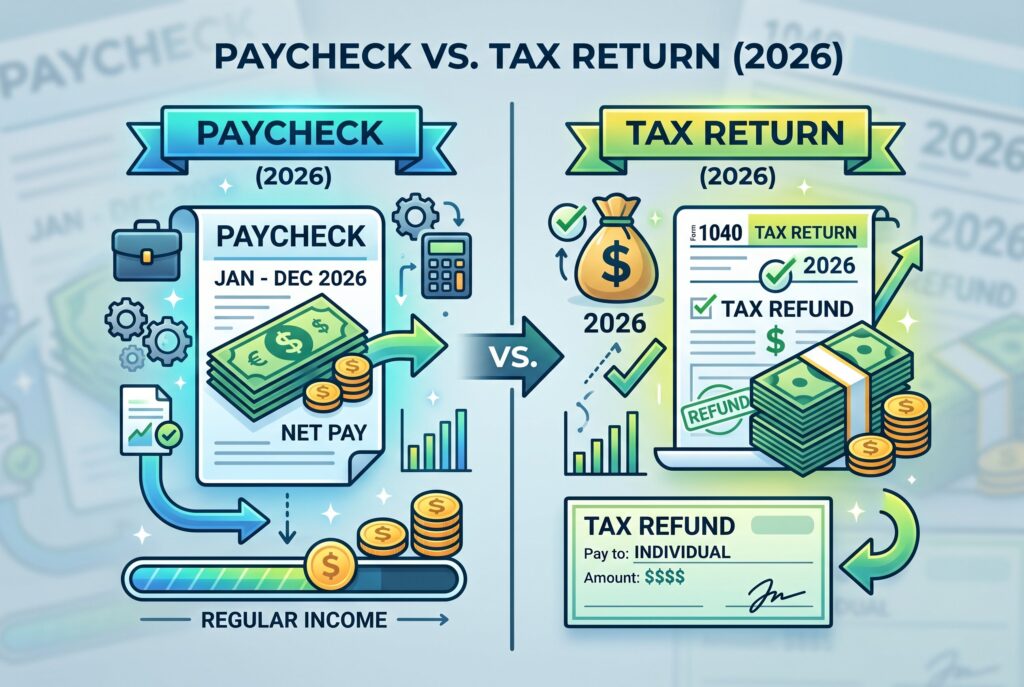
Many workers won’t see the benefit immediately in weekly payroll. Your employer may still withhold federal income tax from overtime pay. The actual benefit may appear as a larger refund or a smaller tax bill when you file.
This is why documentation matters. For 2025 reporting, some workers may need to use paystubs or employer statements if qualified overtime isn’t separately reported. IRS guidance points taxpayers to Schedule 1-A instructions when a W-2 or other statement doesn’t separately report qualified overtime compensation. So, when does no tax on overtime start? It applies beginning with tax year 2025, which means many workers first see the effect on returns filed in 2026.
Frequently Asked Questions
How Does No Tax on Overtime Work?
It works as a deduction. You calculate qualified overtime compensation, apply the cap and phaseout rules, and claim the allowed amount on your federal return.
Does This Apply to Salaried Employees?
It depends. Some salaried workers are nonexempt and eligible for overtime under federal labor rules. Exempt salaried employees who don’t receive qualified overtime generally wouldn’t have qualifying overtime premium pay.
What If I Worked Double-Time?
Double-time can be more complex because the premium portion differs from time-and-a-half. You’ll need to identify the amount paid above your regular rate and confirm whether it qualifies under applicable rules.
What If My Employer Doesn’t Report Overtime Separately?
You may need to use your paystubs, payroll portal, or year-end statement to calculate the qualified amount. Keep records and ask payroll for a breakdown if the numbers aren’t clear.
Is This a Tax Credit?
No. It’s a deduction, not a credit. A deduction lowers taxable income. A credit directly lowers tax owed.
Conclusion
The best use of a no tax on overtime calculator isn’t just estimating savings. It’s helping you understand the moving parts: overtime premium, deduction caps, MAGI phaseouts, payroll withholding, and final tax-return treatment. Before filing, save your final paystub, review your W-2, check whether overtime is separated clearly, and consider speaking with a tax professional if you have multiple jobs, mixed pay rates, union overtime, double-time, or income near the phaseout range. The headline may be simple, but the savings belong to workers who track the details carefully.