
The heavy “clink” of a metal credit card can feel powerful at checkout. It looks premium, feels expensive, and instantly signals status. But a metal credit card doesn’t automatically make you smarter with money. Behind the weight and shine, it still works like any other credit card. The real question isn’t whether the card feels luxurious. It’s whether the credit card rewards, travel benefits, and credit card perks are worth the annual fee you pay every year.
Interactive Tool: The Premium Card Net Value Calculator
Before applying, do the math.
Start with the annual fee. Then subtract only the benefits you will actually use.
Example:
- Annual fee: $550
- Travel credit you will use: $300
- Dining credit you will use: $200
- Airport lounge value to you: $100
- Estimated net value: $50 positive
But if you don’t travel, don’t use the credits, and only want the metal feel, the math changes fast. A $550 annual fee with unused perks is still $550 out of your pocket.
The smartest rule is simple: never count a benefit unless it replaces money you would have spent anyway.
Premium Card Net Value Calculator
Use this calculator before applying for a premium credit card. Start with the annual fee, then subtract only the benefits you will actually use. A benefit should count only if it replaces money you would have spent anyway.
Total Usable Benefits = Travel Credit + Dining Credit + Lounge Value + Other Credits + Extra Rewards
Estimated Net Value = Total Usable Benefits − Annual Fee
Break-Even Benefit Needed = Annual Fee − Total Usable Benefits, if positive
Note: Do not count a perk at full face value unless it replaces spending you would have made anyway. This calculator does not include interest charges, late fees, redemption restrictions, opportunity cost, or changes to card benefits.
Metal vs. Plastic Credit Cards: Is It Just for Show?
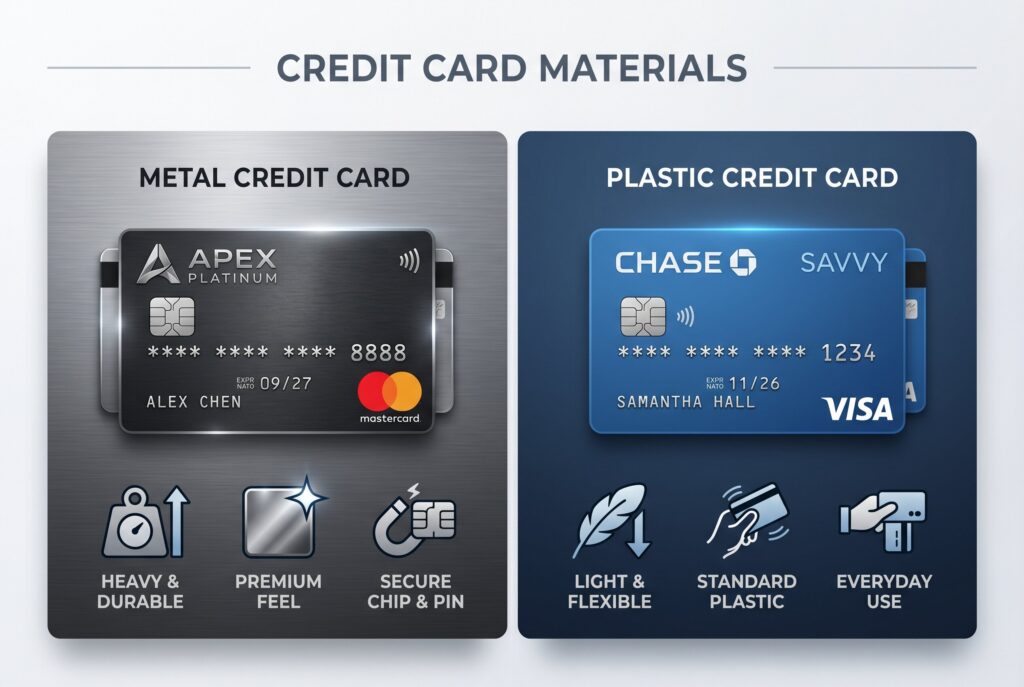
In daily use, metal vs plastic credit cards are more similar than different. Both can swipe, tap, insert into chip readers, and connect to digital wallets. Your payment network, issuer, APR, credit limit, fraud protection, and rewards program matter far more than the card material.
The difference is emotional. Metal cards feel premium because they are heavier and more durable. That feeling can be enjoyable, but it doesn’t improve your credit score, lower your interest rate, or increase your rewards by itself. A plastic card with no annual fee and strong cash back may be better than a metal card with expensive perks you never use. The material should be the last reason you choose a card, not the first.
The Heavy Perks of Premium Credit Cards in 2026
Many metal cards are tied to premium credit cards, and that is where the real value may appear. The physical card is just packaging. The benefits are the product.
Premium cards may offer airport lounge access, hotel credits, travel insurance, rental car coverage, statement credits, concierge services, elevated rewards on dining or travel, and stronger purchase protections. For frequent travelers, these benefits can feel substantial. For example, airport lounge access can save money on food and drinks during long layovers. Trip delay insurance can help when flights go wrong. Baggage insurance can soften the cost of lost luggage. Higher rewards on travel and restaurants can add up quickly for someone who spends heavily in those categories.
But these perks only matter when they match your lifestyle. If you fly twice a year, lounge access may sound glamorous but deliver little real value. If you rarely stay in hotels, hotel credits may expire unused. If you carry a balance, rewards become nearly irrelevant because interest charges can easily erase the benefit.
The Real Cost: Breaking Down the Annual Fee
The annual fee is where the truth appears. A metal credit card may charge $95, $250, $550, or even more each year. That fee can be reasonable if the card gives you more usable value than it costs. It can also be a quiet waste of money if you open the card for status. Think of the annual fee like a membership. You are paying for access to a bundle of benefits. If you use the bundle, it may be worth it. If you don’t, the card is an expensive decoration.
Here is the trap: issuers often advertise large benefit totals, but not all credits are easy to use. A card may offer travel credits, dining credits, entertainment credits, or shopping credits, but each one may have rules, eligible merchants, monthly limits, or expiration dates.
A realistic calculation should include three questions.
- Will I use this benefit naturally?
- Would I spend this money without the card?
- Is the reward flexible enough to matter?
- If the answer is no, don’t count it as full value.
Are Metal Credit Cards Harder to Get?
Many metal credit cards are premium products, so approval may require strong credit, steady income, and a clean payment history. The card material itself isn’t the reason for strict approval standards. The premium rewards structure is.
Issuers want customers who are likely to use the card often and pay responsibly. If your credit profile is still developing, a simpler rewards card may be a better first step. A metal card should never be used to look financially successful before your finances are stable. Pay down high-interest debt first. Build an emergency fund. Improve your credit habits. Then compare premium cards if the benefits truly fit.
Do Metal Credit Cards Offer Better Rewards?
Sometimes, but not always. A metal credit card may offer excellent credit card rewards, especially in travel, dining, or luxury categories. But some plastic cards offer strong cash back with no annual fee. The best card depends on spending behavior, not material.
If you spend heavily on airfare, hotels, and restaurants, a premium travel card may outperform a basic cash back card. If most of your spending is groceries, utilities, and everyday purchases, a simple no-fee card may produce better net value. This is why the rewards rate alone isn’t enough. A 5% reward in a category you rarely use is less valuable than 2% cash back on purchases you make every week.
Disposal 101: How to Destroy a Metal Credit Card Safely
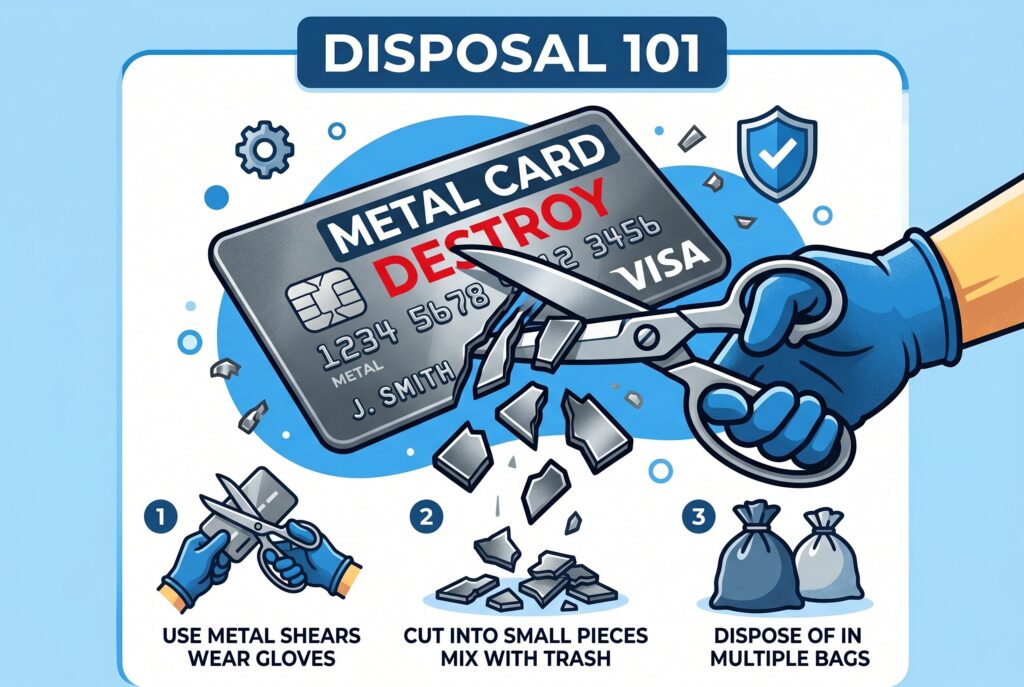
How to destroy a metal credit card is more complicated than destroying a plastic card. Don’t put it in a home shredder. Don’t assume scissors will work. Metal cards can damage shredders, resist cutting, and leave sensitive information exposed if handled poorly.
The safest option is to ask the issuer for a return envelope. Many issuers provide secure mailers so the card can be destroyed properly. If you must handle it yourself, contact the issuer first. Some people use tin snips or heavy-duty tools, but that can be unsafe and unnecessary. Also remember to remove the card from digital wallets and update any automatic payments before closing or replacing it.
Conclusion
A metal credit card can feel exciting, but the metal isn’t the value. The value comes from rewards, protections, credits, travel benefits, and how well the card fits your actual spending. Choose the card for the math, not the moment it hits the table. If the annual fee is outweighed by benefits you truly use, a premium metal card can be worthwhile. If you only want the status, a plastic card with better rewards and no annual fee may leave you richer. The smartest card isn’t the heaviest one. It’s the one that pays you back.