The short answer is yes. Legally, you can learn how to create a trust and complete the process yourself using online estate planning platforms, downloadable templates, or DIY trust kits. For many people with straightforward finances, this can be a legitimate and cost effective option. However, just because you can create a trust on your own doesn’t mean it is always the right choice.
If your total estate is relatively modest, your family structure is simple, and all your assets are located within one state, a DIY approach may work well. On the other hand, if you own significant assets, have a blended family, own property in multiple states, or need advanced asset protection planning, a mistake during the process can create expensive legal consequences later. Understanding the difference between a simple estate and a complex one is the first step before deciding whether you should learn how to make a trust yourself or seek professional guidance.
What Is a Trust and Why Do People Create One?
Before discussing how to set up a trust, it helps to understand what is a trust in practical terms. A trust is a legal arrangement that allows one person, known as the grantor, to transfer assets into a separate legal entity that is managed by a trustee for the benefit of beneficiaries. The trust document contains instructions explaining how those assets should be managed and distributed.
Most people create trusts to avoid probate, maintain privacy, simplify inheritance, provide financial support for loved ones, or establish long term control over assets after death. The most common trust used by families is a revocable living trust. This type of trust can usually be modified, updated, or revoked during the grantor’s lifetime. Because it offers flexibility and probate avoidance, it is often the first option considered by people exploring how to start a trust.
The $500,000 Rule: When DIY Is Usually Safe
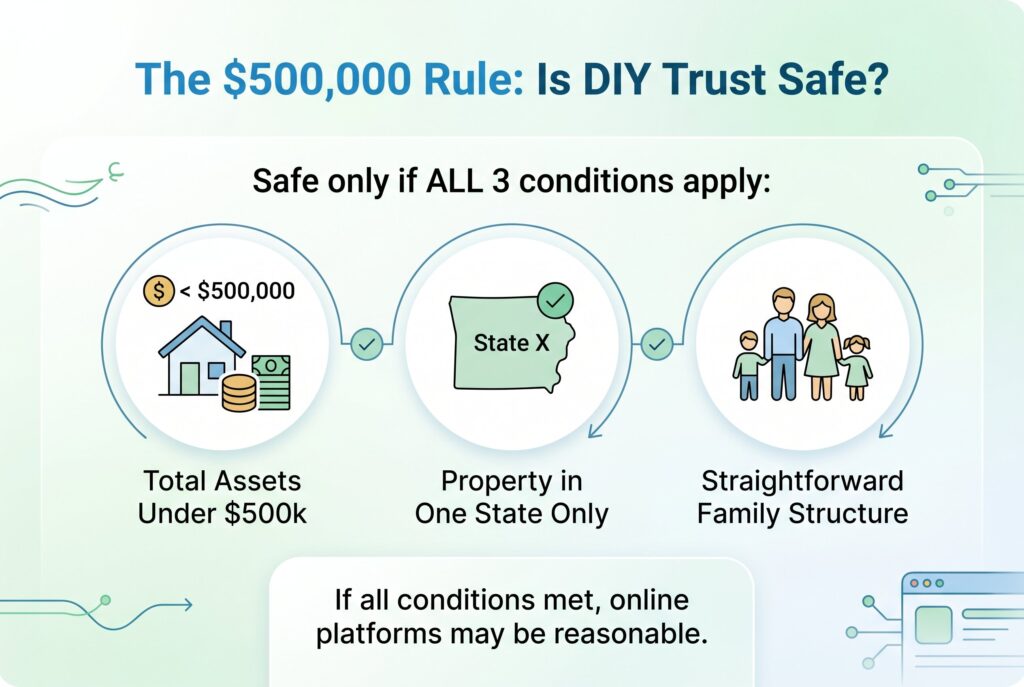
Many people researching how to create a trust are looking for a clear answer regarding whether DIY estate planning is realistic. A practical guideline is what many estate planning professionals informally call the $500,000 rule. DIY trust creation is generally safer when all three of the following conditions apply:
1. Your Estate Is Relatively Simple
If your total assets are under approximately $500,000, the legal complexity tends to be lower. This may include a primary residence, retirement accounts, savings accounts, and a few investment holdings.
2. You Own Property in Only One State
Multiple state ownership creates additional legal challenges. Real estate located in different states may involve separate probate considerations, recording requirements, and trust funding procedures.
3. Your Family Structure Is Straightforward
DIY planning becomes much riskier when blended families, stepchildren, estranged relatives, special needs beneficiaries, or business succession issues are involved. These situations often require highly specific trust language that standard templates may not provide. If you meet all three conditions, learning how to make a trust through an online platform may be a reasonable starting point.
The 3 Fatal DIY Mistakes That Can Invalidate Your Trust
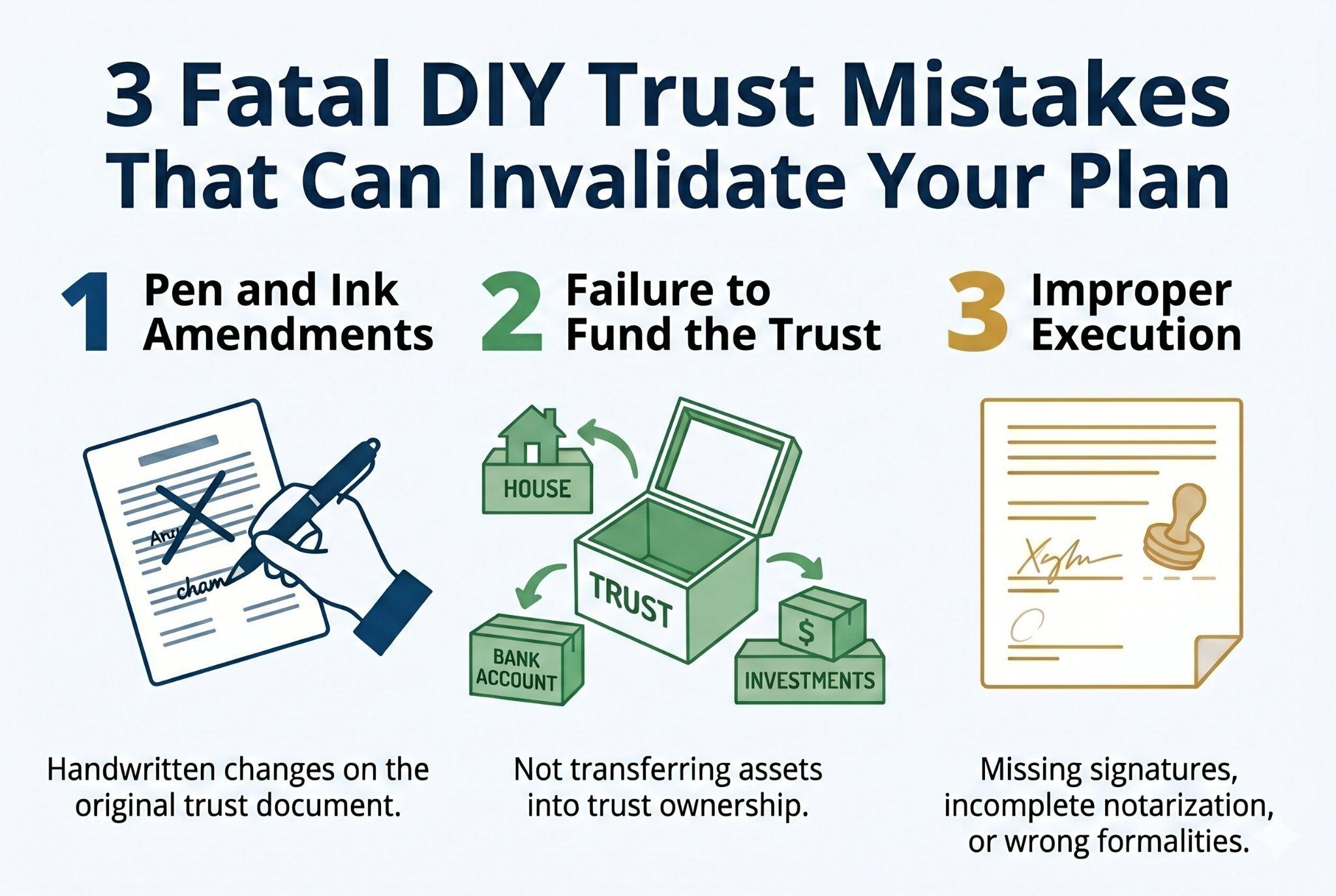
The biggest danger is not creating the trust itself. The biggest danger is creating a trust that doesn’t work when your family actually needs it.
1. The Pen and Ink Amendment Mistake
Many people create a trust, then later decide to change a beneficiary, trustee, or distribution plan. Instead of following proper amendment procedures, they simply cross out words and write new instructions directly onto the original document. This is one of the most dangerous mistakes in estate planning.
Trust modifications should typically be completed through a formal amendment or complete trust restatement. Unauthorized handwritten changes can create ambiguity and may even trigger legal challenges regarding the document’s validity. If your trust needs updating, do not treat it like a personal notebook. Follow your state’s legal requirements carefully.
2. The Funding Failure
This is the mistake that causes more DIY trust failures than almost any other issue. Many people successfully complete the paperwork and proudly place the trust document in a safe or filing cabinet. Unfortunately, they forget the most important step. Funding. A trust is only effective when assets are actually transferred into it.
Your house may need a new deed. Financial accounts may require ownership changes. Investment accounts may need retitling. Certain assets may require beneficiary updates. Without funding, the trust often becomes little more than an expensive stack of paper. A trust cannot control assets that were never transferred into it.
3. Improper Execution
Every state has specific legal requirements governing trust execution. Some states require notarization. Others may require witnesses. Certain situations require additional documentation depending on the trust structure. Missing signatures, incomplete notarization, or improper execution can create serious challenges years later. People often focus on drafting the trust and overlook the legal formalities required to make the document enforceable.
Revocable Trusts vs Irrevocable Trusts
If you are exploring how to start a trust on your own, it is important to understand the difference between revocable and irrevocable trusts. A revocable living trust is generally the most DIY friendly option. It provides flexibility and allows the grantor to maintain control over assets. An irrevocable trust is a completely different level of complexity. Once assets are transferred into an irrevocable trust, changes become extremely limited. Tax consequences, asset protection rules, creditor protections, and trustee responsibilities become significantly more complicated. Because mistakes can create substantial legal and tax problems, irrevocable trusts are rarely suitable DIY projects.
The Hybrid Solution: The $500 Peace of Mind Strategy
Many people assume there are only two choices. Either spend a few hundred dollars on online software or spend several thousand dollars hiring an attorney. In reality, there is a third option. Many estate planning attorneys offer document review services. Under this approach, you create the initial trust yourself using a reputable platform. Then an attorney reviews the finished documents before execution. Depending on your location and complexity, this review often costs around $500. For many families, this approach provides an ideal balance between affordability and professional protection. It allows you to save money while still reducing the risk of costly legal mistakes.
Conclusion
Learning how to create a trust can absolutely be a worthwhile project for the right person. Modern online tools have made trust creation more accessible than ever before, leading to the common concern “can you set up a trust without an attorney?” In many cases, the answer is yes. However, estate planning is about more than completing forms. It is about making sure your wishes are legally effective and that your plan works when your family needs it most.
If your estate is simple, your assets are modest, and your family situation is straightforward, a DIY trust may be a reasonable option. If your circumstances involve significant assets, multiple properties, blended families, special needs planning, or complex tax considerations, professional guidance can be well worth the investment. The true cost of a trust is not measured by what you spend creating it today. It is measured by whether it protects your family and helps avoid unnecessary complications in the future.
Related Articles
How Much Does It Cost to Set Up a Trust in 2026? (Full Fee Breakdown)