
A successor trustee is the backup person or institution named in a living trust to take over when the original trustee can’t serve anymore. That may happen when the trust creator dies, becomes incapacitated, develops dementia, has a serious illness, or formally resigns. Whether you are choosing a successor trustee or just discovered you were named, the role requires organization, patience, and a clear understanding of legal duties.
What Exactly Is a Successor Trustee?
A successor trustee can be activated in two major situations: incapacity and death. Incapacity happens when the grantor is still alive but can’t manage their own affairs. For example, if the grantor has a stroke, enters a coma, or develops advanced dementia, the successor trustee may begin paying bills, managing investments, handling property expenses, and making sure the trust assets remain protected. Death is the second trigger. After the grantor dies, the successor trustee pays final debts, gathers records, communicates with beneficiaries, files tax documents, and distributes assets according to the trust.
This is where trustee vs executor becomes important. What is a will executor? An executor of a will is the person named in a will to handle probate assets after death. What does an executor of a will do? The executor of estate files the will with the probate court, pays debts, and distributes assets after court approval. A successor trustee is different because a trust can operate outside probate. An executor of will usually has authority only after death. A successor trustee may act during incapacity and after death, often with less court involvement.
The Core Duties and Legal Responsibilities
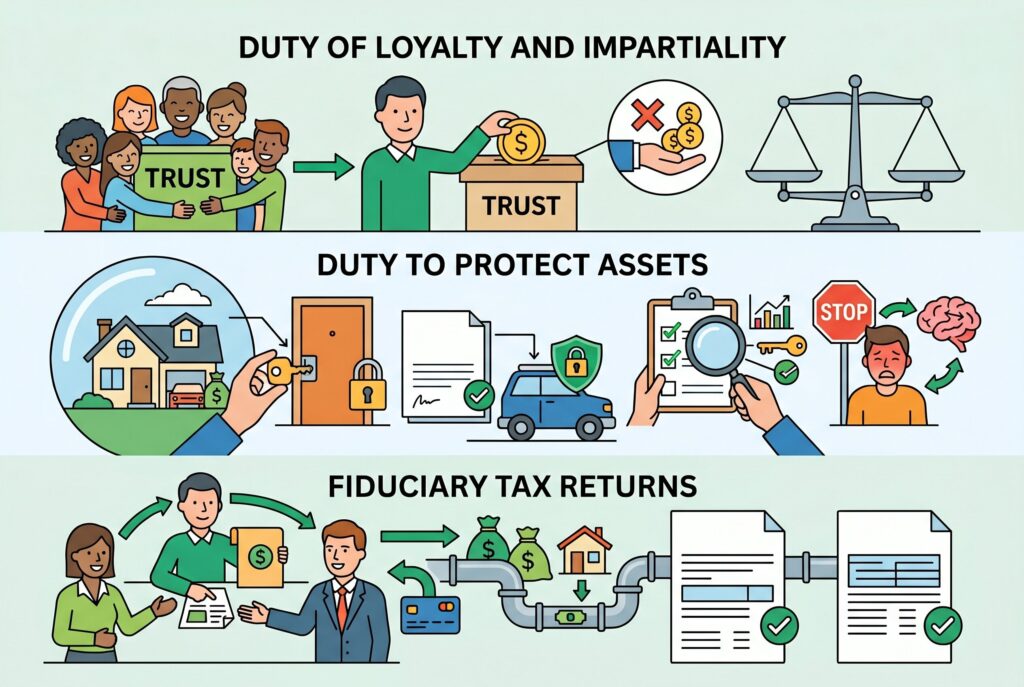
1. Duty of Loyalty and Impartiality
A successor trustee must put the trust and beneficiaries first. That means no self-dealing. You can’t borrow trust money, sell yourself trust property at a discount, or favor your own inheritance over someone else’s. Impartiality also matters. If one beneficiary receives income now and another receives principal later, the trustee must balance both sides fairly. The job isn’t to please the loudest family member. It’s to follow the trust.
2. Duty to Protect Assets
The trustee must protect physical and financial assets. That may include changing locks, keeping homeowners insurance active, forwarding mail, securing vehicles, reviewing bank accounts, and preventing unnecessary investment risk. If the trust owns stocks, the trustee can’t ignore the portfolio. Trust money must be handled prudently, not emotionally. Leaving everything unmanaged can create liability.
3. Fiduciary Tax Returns
A trustee may need to coordinate the deceased person’s final Form 1040 and the trust’s fiduciary income tax return, often Form 1041. This can become complicated quickly, especially if the trust earns income, sells property, or distributes assets. A CPA or estate attorney can usually be paid from trust funds.
For the Grantor: How to Choose Your Successor
Choosing a successor trustee shouldn’t be based only on birth order, guilt, or family pressure. Your oldest child may be loving but terrible with money. Your most sensitive child may struggle with conflict. Your most successful child may not have time. Look for someone who is honest, financially organized, calm under pressure, and willing to communicate. Geographic proximity helps, especially if the trust owns a house, vehicles, or personal property.
Be careful with co-trustees. Naming all your children as co-trustees may feel fair, but it can freeze decision-making. Every sale, account transfer, or tax decision may require multiple signatures and agreement. If siblings already argue, shared authority can turn administration into a battlefield. A corporate trustee, such as a bank or trust company, may be useful for large estates, blended families, special needs beneficiaries, business assets, or high-conflict families. It costs more, but neutrality can be worth it.
For the Successor: Essential Steps When Taking Over

Step 1: Collect the Core Documents
Start with the trust agreement and Certificate of Trust. The Certificate of Trust is especially useful because it proves your authority to banks without revealing every private detail in the full trust document. You should also order certified death certificates if the grantor has died. Ten or more copies may be needed for banks, brokerages, insurers, title companies, and government agencies.
Step 2: Apply for an EIN
After death, the trust may need a new Employer Identification Number from the IRS. The deceased person’s Social Security number shouldn’t keep being used for trust administration. The EIN helps open trust bank accounts, report income, and separate trust finances from personal finances.
Step 3: Notify Beneficiaries
Many states require the trustee to send formal notice to beneficiaries within a strict deadline. Sixty days is a common benchmark, but rules vary by state. Don’t skip this step. Beneficiary notice creates transparency and helps protect the trustee from accusations of secrecy.
Step 4: Inventory and Secure Assets
Make a complete list of trust property: bank accounts, investment accounts, real estate, vehicles, business interests, insurance policies, personal property, and debts. Secure vacant homes, keep utilities active when needed, and document everything with photos and records.
Can a Successor Trustee Get Paid?
Yes, a successor trustee can usually receive reasonable compensation from the trust. The amount may depend on the trust document, state law, time spent, estate complexity, and whether the trustee is an individual or professional. You also aren’t trapped if you were named. If the estate is too complicated, the family conflict is too intense, or you simply can’t serve, you may be able to decline to act. The next named successor trustee can step in, or a court may appoint someone if needed.
Conclusion
A successor trustee carries serious legal and financial responsibility. An estate executor and a successor trustee may both help transfer assets, but they don’t work the same way. The executor of a will usually deals with probate. The successor trustee manages trust assets according to the trust terms. If you are creating trust, choose the person carefully. If you are taking over as trustee, move slowly, document everything, and get professional help early. The trustee’s job isn’t to make everyone happy. It’s to protect the trust, follow the instructions, and act in the beneficiaries’ best interests.