



Retirement accounts can feel like alphabet soup: 401(k), Roth 401(k), Roth IRA, Traditional 401(k), RMDs, catch-up contributions. The names sound technical, but the decision is deeply personal. It affects when you pay taxes, how flexible your retirement income may be, and how much control you’ll have later.
So, what is a Roth 401(k)? A Roth 401(k) is an employer-sponsored retirement account funded with after-tax contributions. You don’t get a tax deduction today, but your money can benefit from tax-free growth and tax-free withdrawals in retirement if the qualified distribution rules are met.
The Core Difference: Roth 401(k) vs Traditional 401(k)
The Roth 401(k) vs Traditional 401(k) decision comes down to tax timing.
| Feature | Roth 401(k) | Traditional 401(k) |
| Contributions | After-tax dollars | Pre-tax dollars |
| Current tax break | No | Yes |
| Withdrawal tax treatment | Qualified withdrawals can be tax-free | Withdrawals taxed as ordinary income |
| Income limits | None for workplace plans | None for workplace plans |
| Best for | Future tax certainty | Current tax reduction |
A Traditional 401(k) may feel easier today because it reduces taxable income now. A Roth 401(k) asks you to pay tax upfront in exchange for potential tax-free income later. Neither is automatically better. The right choice depends on your tax bracket now, your expected tax bracket in retirement, and your need for flexibility.
Roth 401(k) Contribution Limits: What to Expect in 2026
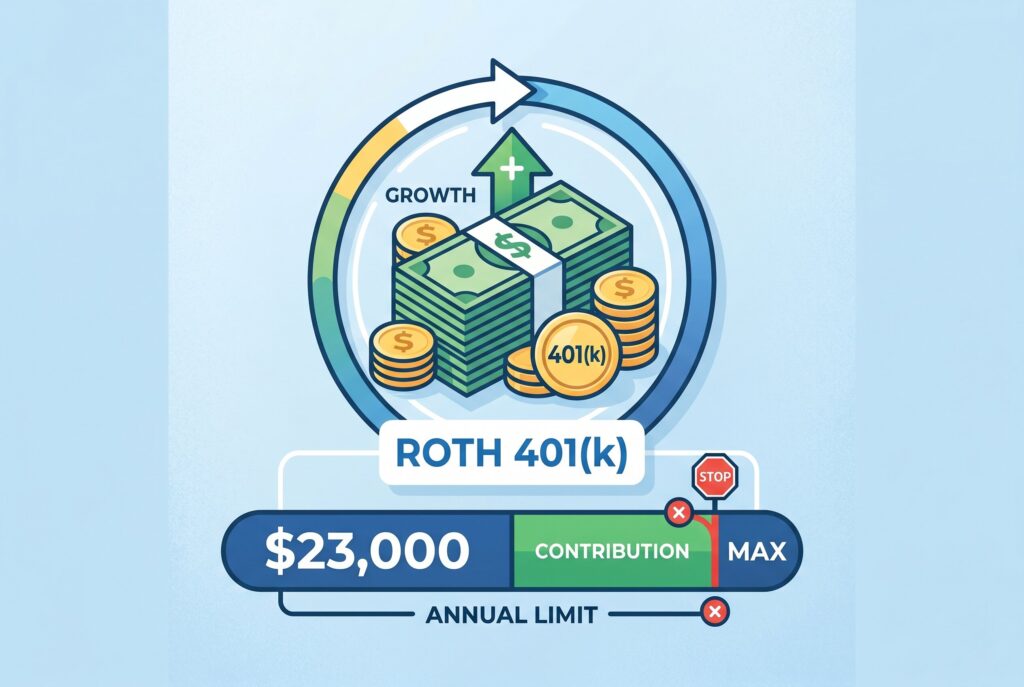
Roth 401(k) contribution limits 2026 are tied to the broader 401(k) contribution limits set by the IRS. For 2026, employees can contribute up to $24,500 to 401(k), 403(b), most 457 plans, and the federal Thrift Savings Plan. The standard catch-up contribution limit for workers age 50 and older is $8,000. Workers ages 60 to 63 may be eligible for a higher catch-up contribution of $11,250 if the plan allows it.
These limits apply across employee elective deferrals, whether you choose Roth, Traditional, or a mix of both. For example, you can split contributions between Roth and Traditional, but your combined employee contribution can’t exceed the annual limit. A major 2026 rule also affects higher earners. Under SECURE 2.0, certain high earners must make catch-up contributions as Roth contributions beginning in 2026, rather than as pre-tax catch-ups.
The 2026 Roth 401(k) Tax Rules You Must Know
Tax-free Growth and Income Tax Exclusion
The biggest appeal of a Roth 401(k) is tax-free growth. Since contributions are made after income tax, the account can grow without annual tax on investment gains. Later, qualified withdrawals can be excluded from federal income tax. That makes the Roth 401(k) especially powerful for younger workers, high-growth investors, and anyone who wants more predictable retirement income.
The Roth 401(k) 5-year Rule
The Roth 401(k) 5-year rule is essential. To receive tax-free earnings, your distribution generally must be qualified. That usually means the Roth account has satisfied the five-year rule and you are at least age 59½, disabled, or the distribution is made after death. This is where many people make mistakes. Contributions and earnings aren’t treated the same way in all withdrawal situations. If you take money too early, earnings may be taxable and may face penalties.
Employer Matching Contributions
Employer matching contributions add another layer. Your own Roth 401(k) contributions are after-tax, but employer contributions may have different tax treatment depending on plan rules and current law. Many employer matches have historically gone into a pre-tax source, meaning the match and its earnings are taxed as ordinary income when withdrawn.
The practical takeaway is simple: don’t assume your entire 401(k) balance is Roth just because you personally chose Roth contributions. Check your plan statement. You may have separate Roth, pre-tax, and employer match buckets.
Required Minimum Distributions
Required Minimum Distributions, or RMDs, used to be a major difference between Roth 401(k)s and Roth IRAs. That has changed. The IRS states that account owners aren’t required to take withdrawals from designated Roth accounts in 401(k) or 403(b) plans while alive, though beneficiaries may still be subject to RMD rules. This makes Roth 401(k)s more attractive for long-term planning because you may no longer need to roll the account into a Roth IRA simply to avoid lifetime RMDs.
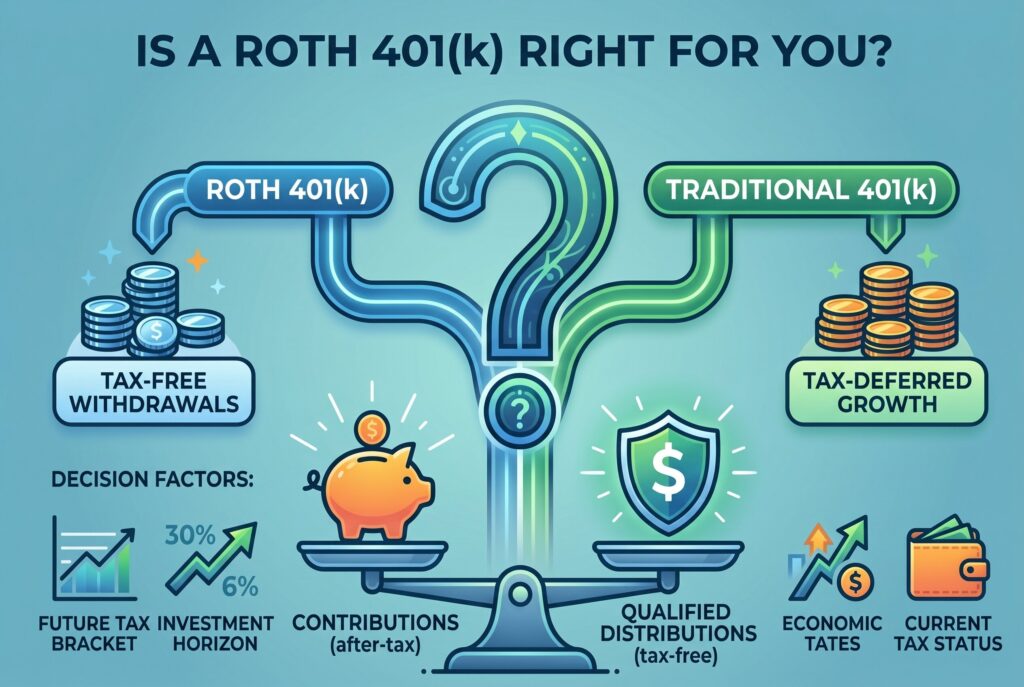
Is a Roth 401(k) Right for You? A Strategic Analysis
When to Choose Roth
A Roth 401(k) may make sense if you expect your tax rate to be higher in retirement, if you’re early in your career, or if you want tax diversification. It can also help people who already have a large pre-tax retirement balance and want more control over taxable income later. Roth may also appeal if you value certainty. Paying tax now can feel painful, but future tax-free withdrawals may reduce stress when you’re living on retirement income.
When to Choose Traditional
A Traditional 401(k) may make more sense if you need the current-year tax break, expect to be in a lower tax bracket later, or have high income today and limited cash flow. The immediate tax deduction can free up money for debt repayment, emergency savings, or higher total retirement contributions.
For many savers, the best answer isn’t Roth or Traditional. It’s both. Splitting contributions can create tax diversification, giving you taxable and tax-free income sources in retirement.
Conclusion
A Roth 401(k) combines the structure of a workplace retirement plan with the appeal of tax-free growth. It can be a powerful tool for people who want future tax flexibility, no workplace-plan income limit, high contribution capacity, and long-term retirement planning control.
Still, Roth 401(k) tax rules require care. The Roth 401(k) 5-year rule, qualified distribution requirements, employer matching contributions, and 2026 contribution limits all matter. Before choosing, compare your current tax bracket with your expected retirement bracket and review your employer plan details. The smartest retirement strategy isn’t just saving more. It’s saving in the right tax bucket for the life you’re trying to build.
Related Articles
Roth 401(k) vs. Roth IRA: How to Choose the Right Roth Account in 2026

