



An executor of estate carries one of the most important responsibilities after someone dies. This person manages the deceased person’s property, handles debts, communicates with beneficiaries, files required paperwork, and distributes assets according to the will. The role begins after death, but full authority usually comes only after the probate court approves the appointment.
An estate executor may need to deal with banks, insurance companies, creditors, tax agencies, real estate, personal property, and family members who want answers quickly. The work can feel overwhelming, especially during grief. A good executor of will must stay organized, keep careful records, and avoid decisions that could create personal liability.
Key Duties of an Executor of Estate

Understanding what an executor of estate is becomes easier when you look at the responsibilities involved. An executor is the person legally responsible for managing and settling a deceased person’s estate. While the specific requirements vary by state, most executors must complete several core duties while avoiding mistakes that could delay probate or create personal liability.
1. File the Will and Obtain Legal Authority
One of the executor’s first responsibilities is filing the original will with the probate court. Being named in the will doesn’t automatically grant authority to act on behalf of the estate. Most financial institutions require court-issued Letters Testamentary before releasing information or allowing transactions. A common mistake is attempting to access accounts, transfer property, or make financial decisions before receiving legal authority from the court. Acting too early can create unnecessary legal complications.
2. Locate and Protect Estate Assets
After receiving authority, the executor must identify and safeguard estate assets. These may include bank accounts, investment portfolios, real estate, vehicles, business interests, insurance policies, digital assets, and personal property. Protection should come before distribution. Executors may need to secure vacant homes, maintain insurance coverage, forward mail, and document valuable possessions. One of the most common legal mistakes is allowing assets to disappear, deteriorate, or be removed by family members before a complete inventory is created.
3. Create an Accurate Inventory of the Estate
Executors are generally required to identify estate assets and determine their value. Some assets, such as bank accounts, are easy to verify, while others may require professional appraisals. An incomplete inventory can lead to disputes among beneficiaries, tax problems, and allegations of mismanagement. Maintaining detailed records and obtaining professional valuations when necessary helps protect both the estate and the executor.
4. Pay Debts, Taxes, and Estate Expenses
Before distributing inheritances, the executor must address legitimate debts and financial obligations. These may include funeral expenses, medical bills, mortgages, credit card balances, income taxes, property taxes, and administration costs. One of the most serious mistakes an executor can make is paying beneficiaries before all debts and taxes have been resolved. In some situations, executors may face personal liability if estate funds are distributed prematurely and creditors remain unpaid.
5. Distribute Assets to Beneficiaries
Once debts, taxes, and court requirements have been satisfied, the executor can distribute the remaining assets according to the will. Clear communication and accurate recordkeeping are essential throughout this stage. A frequent mistake is making unequal, undocumented, or early distributions. Executors should keep detailed records, obtain written receipts when appropriate, and ensure the estate remains financially solvent before making final distributions.
The 3 Fatal Legal Mistakes Every Executor Must Avoid
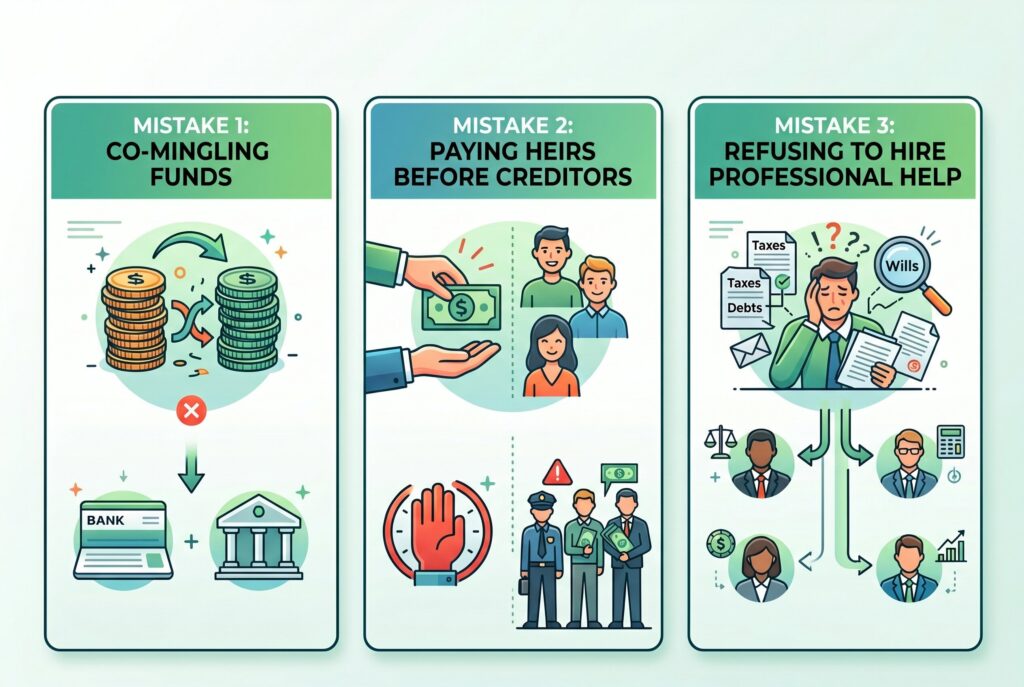
Mistake 1: Co-Mingling Funds
Co-mingling happens when the executor mixes estate money with personal money. This can occur when estate checks are deposited into a personal account or estate bills are paid casually without proper records. This mistake can create confusion, beneficiary suspicion, and personal liability. The safer approach is to open a dedicated estate account, record every transaction, and keep receipts for all payments.
Mistake 2: Paying Heirs Before Creditors
One of the most dangerous mistakes an executor can make is distributing money too early. Beneficiaries may pressure the executor, especially when emotions are high or family relationships are strained. Creditors and tax agencies usually have priority over heirs. If the executor gives money to beneficiaries and later discovers a valid medical bill, tax debt, or legal claim, the estate may not have enough cash left to pay. In some cases, the executor may become personally responsible for the error. A careful executor waits until creditor deadlines, tax obligations, and court requirements are clear before making final distributions.
Mistake 3: Refusing to Hire Professional Help
Some executors try to handle everything alone because they want to save money for the family. That decision can backfire. Probate attorneys, CPAs, appraisers, and financial advisors can often be paid from estate funds. Their guidance may help prevent missed deadlines, tax mistakes, improper distributions, and disputes with beneficiaries. Professional support becomes especially important when the estate includes real estate, business interests, blended-family issues, unpaid debts, contested wills, or complex tax questions.
Conclusion
Serving as an executor of estate can be stressful, time-consuming, and emotionally draining. The role may require months of paperwork, repeated calls to banks, court filings, creditor notices, tax coordination, property management, and difficult conversations with family members. No one should accept the role without understanding the responsibility. A named executor can often decline through a formal process called Renunciation of Executor. When that happens, a backup executor, another qualified person, or a professional fiduciary may be appointed.
For those who accept, success depends on patience, documentation, and sound judgment. Keep estate money separate. Communicate clearly with beneficiaries. Pay debts before heirs. Ask for professional help when the estate becomes too complex. An executor of will honors the deceased person by protecting the estate and following the law carefully. With the right process, the role can be handled responsibly, even when the family situation feels difficult.

