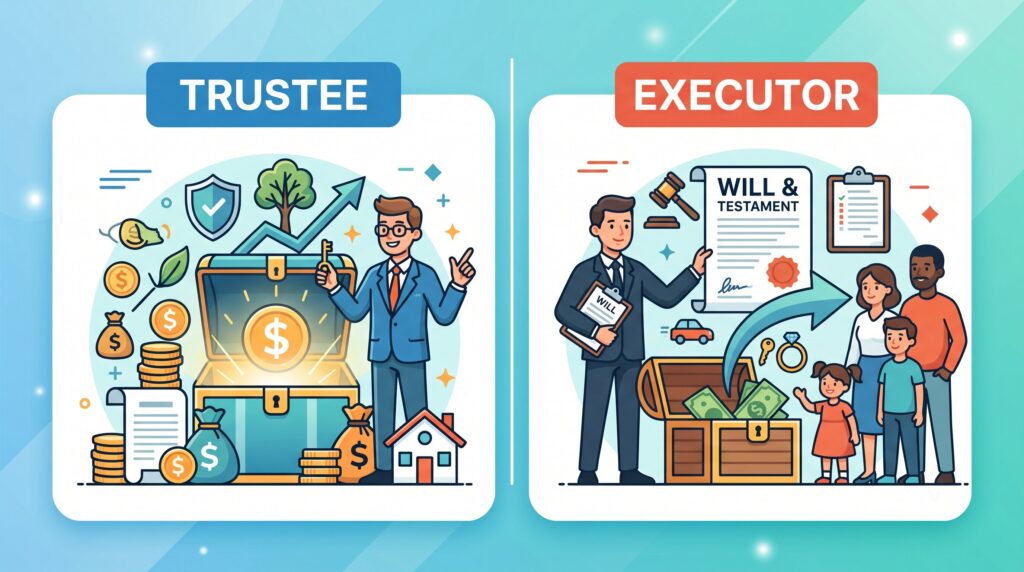
Estate planning often raises questions about trustee vs executor. An executor manages the estate after death by handling probate, paying debts and taxes, and distributing assets according to the will. This role is typically temporary.
A trustee manages assets held in a trust and may serve during life, after death, or for many years depending on the trust terms. A successor trustee takes over if the original trustee can no longer serve. While both roles carry significant responsibility, the key difference is simple: an executor settles an estate, while a trustee manages trust assets.
What Does an Executor of a Will Do? The Sprint

To understand what does an executor of a will do, focus on timing. An executor of a will has no real authority while the person who made the will is alive. The role wakes up after death and usually requires court approval. The estate executor starts by filing the original will with probate court. Once the court accepts the appointment, it may issue Letters Testamentary. Banks, brokerages, insurers, and other institutions often require this document before they release information or allow transactions.
After that, the will executor gathers assets. This can include bank accounts, real estate, cars, personal property, business interests, insurance proceeds payable to the estate, and digital assets. The executor must protect these assets before anyone receives an inheritance. That may mean securing a house, keeping insurance active, stopping unnecessary expenses, and preventing family members from removing property too early.
Next comes debt and tax administration. The executor identifies valid creditor claims, pays final bills, files the deceased person’s final income tax return, and may need to handle estate tax filings if the estate is large enough. When people ask what is an executor of a will, this tax and debt responsibility is often the part they underestimate. Only after debts, taxes, court costs, and administrative expenses are handled should the executor distribute assets to beneficiaries. Once the estate is closed and the money is distributed, the executor’s job usually ends.
What Is a Trustee? The Marathon

A trustee manages property held in a trust. Unlike an executor, a trustee may have authority without probate court involvement. The trust document gives instructions about how assets should be used, invested, and distributed.
What is a successor trustee? This is the backup or replacement trustee who takes over when the first trustee can’t continue. For example, if a parent creates a revocable living trust and later develops dementia, the successor trustee may step in to pay bills, manage investments, handle real estate, and support the parent’s care.
Trustee vs. Executor: Understanding the Key Differences in Estate Administration
| Responsibility | Trustee | Executor |
| When Authority Begins | Can act during the trust creator’s lifetime if they become incapacitated and the trust allows it. | Authority begins only after the person passes away and the court validates the will (if required). |
| Primary Role | Manages and administers assets held in a trust according to the trust document. | Manages and settles the deceased person’s estate according to the will. |
| Incapacity Planning | May step in and manage trust assets during the grantor’s incapacity. | Has no authority while the person is still alive. |
| Asset Management | Oversees trust investments, property, and financial accounts, often for many years. | Collects and manages estate assets only during the estate settlement process. |
| Beneficiary Support | Distributes funds for education, healthcare, living expenses, or other purposes outlined in the trust. | Distributes estate assets to beneficiaries after debts and taxes are settled. |
| Property Oversight | Maintains and manages trust-owned real estate and other assets. | Secures and handles estate property until it can be transferred or sold. |
| Debt & Tax Responsibilities | Files trust tax returns and maintains financial records for the trust. | Pays the deceased’s outstanding debts, files final tax returns, and handles estate taxes if applicable. |
| Duration of Service | Often serves for years or decades, depending on the trust terms. | Usually serves until the estate is fully administered, often several months to a few years. |
| Court Involvement | Generally operates outside of probate court supervision. | Frequently works through the probate process and may be supervised by the court. |
| Fiduciary Duty | Must act impartially and in the best interests of all trust beneficiaries. | Must act in the best interests of the estate and its beneficiaries while settling the estate. |
The Fiduciary Duty: Overlap and Legal Liability
Although trustee and executor roles differ, both are fiduciaries. A fiduciary must act in the best interests of the estate, trust, or beneficiaries. Personal preference doesn’t control the process. The governing documents and the law do. This duty includes loyalty, honesty, impartiality, careful recordkeeping, and responsible decision-making. An executor can’t favor one heir simply because they’re closer to that person. A trustee can’t use trust money for personal benefit. Self-dealing can lead to lawsuits, removal, repayment obligations, and personal liability.
Tax mistakes can also create serious consequences. If an executor pays heirs before resolving taxes, unpaid obligations may come back to the estate and possibly to the executor. If a trustee ignores fiduciary tax duties or invests recklessly, beneficiaries may challenge those decisions. The safest approach is simple: keep separate accounts, document every transaction, communicate clearly, and hire professional help when legal, tax, or investment questions become too complex.
Do You Need Both? The Pour-Over Strategy
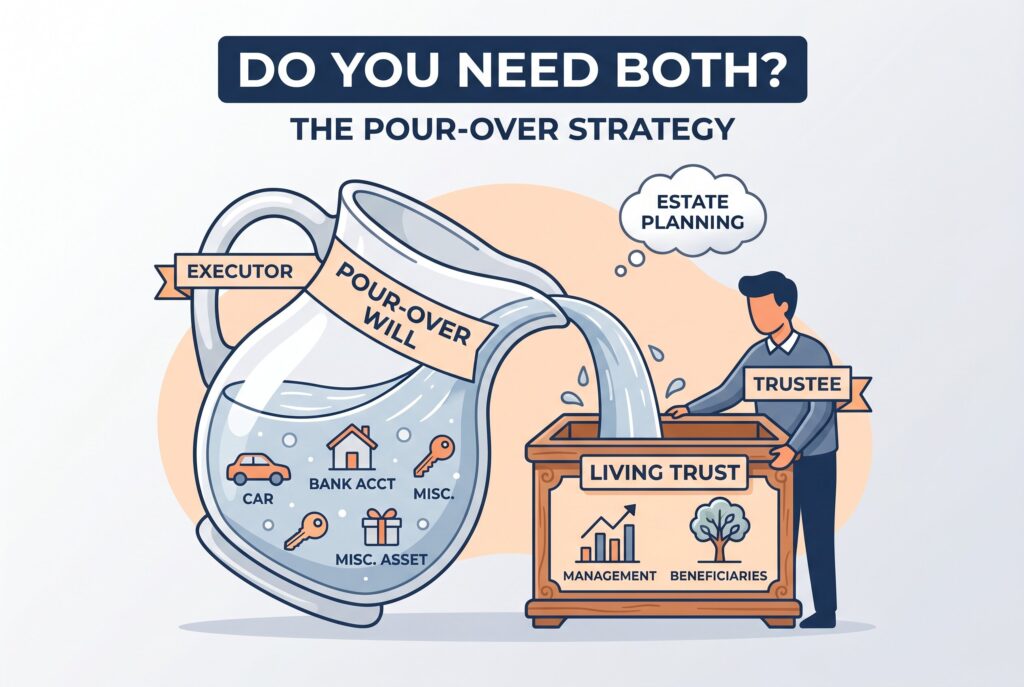
Many people assume that a trust eliminates the need for a will. That assumption can create problems. In many estate plans, the will and trust work together.
A pour-over will act like a safety net. Suppose you create a living trust but forget to transfer a newly purchased car, a bank account, or a piece of property into the trust. After death, the executor of estate may use the pour-over will to move that forgotten asset into the trust. Then the trustee manages or distributes it according to the trust instructions. This structure explains why some people need both an executor and a trustee. The executor handles probate assets and transfers anything missed. The trustee manages trust assets privately.
Should the same person serve in both roles? Sometimes, yes. Naming one person can reduce confusion, speed communication, and prevent conflict between documents. This works best when that person is organized, financially responsible, trustworthy, and willing to serve.
Other families prefer two people. One person may be excellent with court paperwork and deadlines, while another may be better at investments and long-term beneficiary management. Splitting the roles can create checks and balances. Still, two people can also create friction. If the executor and trustee don’t communicate well, the estate may face delays, legal fees, and family frustration. Before naming different people, make sure the will and trust instructions align clearly.
Conclusion
Understanding trustee vs executor helps you choose the right person for each role. An executor handles probate, pays debts and taxes, and distributes assets after death, making organization and attention to detail essential.
A successor trustee typically has a longer-term responsibility, managing trust assets, making distributions, and following trust instructions over time. Financial judgment and reliability are especially important. One person can serve as both executor and trustee, but the best choice depends on the estate’s complexity, family dynamics, and the individual’s skills. In simple terms, the executor settles the estate, while the trustee manages the trust to ensure your wishes are carried out.
Related Articles
Will vs Trust Explained: Key Differences, Benefits, and Which One is Right for You