



Setting up a trust can help you to protect your home, your savings, your business, your children, or the privacy of your family after you are gone. A trust can feel intimidating because estate planning often sounds like a language built for lawyers. But the basic idea is simple.
Understanding Trusts
What Is a Trust?
A trust is a legal arrangement that allows a person, known as the grantor, to transfer assets to a trustee who manages those assets on behalf of one or more beneficiaries. Trusts are commonly used in estate planning to protect assets, manage wealth, and ensure property is distributed according to the grantor’s wishes.
How Does a Trust Work?
When a trust is created, the grantor places selected assets into the trust. A trustee is then responsible for managing those assets based on the instructions outlined in the trust document. The beneficiaries receive the benefits of the trust, either during the grantor’s lifetime or after their death, depending on the trust’s terms.
Benefits of a Trust
Trusts offer several advantages, including greater control over asset distribution, privacy compared to the probate process, and potential tax and asset protection benefits. They can also help provide financial support for family members, minimize legal complications, and ensure assets are managed responsibly.
Types of Trusts
There are many types of trusts designed to meet different estate planning goals. Common examples include revocable trusts, irrevocable trusts, charitable trusts, special needs trusts, and testamentary trusts. Each type serves a unique purpose, but all are intended to help individuals manage and transfer assets more effectively.
The 5 Steps: How to Start a Trust
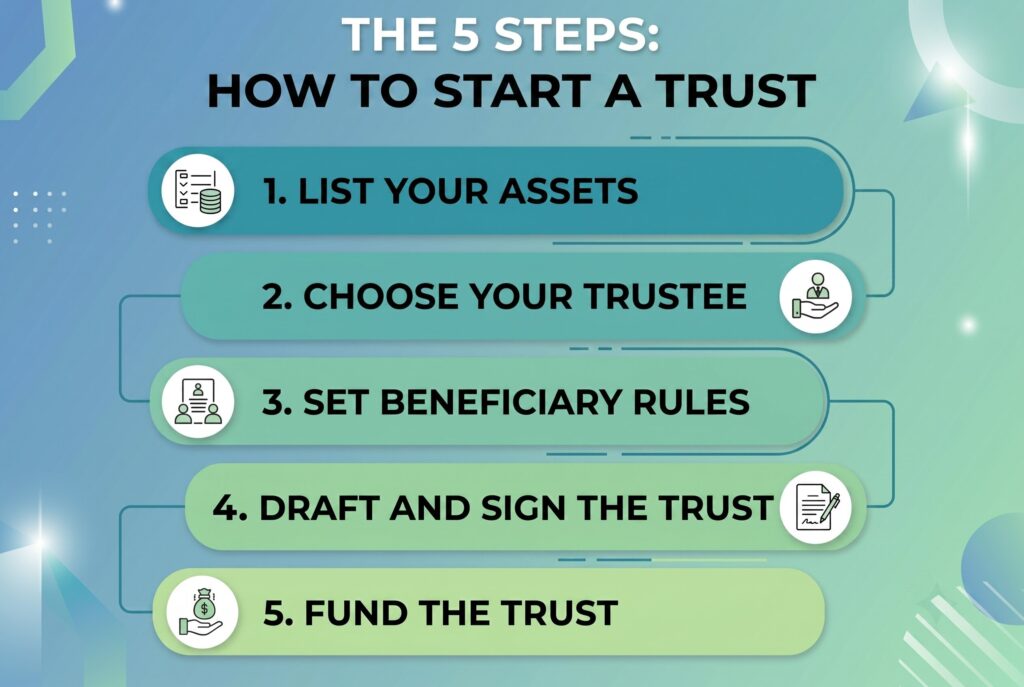
If you want to know how to start a trust, begin with a clear process.
Step 1: List Your Assets
Write down your home, bank accounts, brokerage accounts, life insurance policies, business interests, vehicles, valuable personal property, and retirement accounts. You need to know what you own before deciding what belongs in the trust.
Step 2: Choose Your Trustee
The trustee is the person or institution responsible for managing the trust. You may serve as your own trustee during your lifetime if you create a revocable living trust. You should also name a successor trustee to take over if you become incapacitated or pass away. Choose carefully. A good trustee should be organized, honest, financially responsible, and calm under pressure.
Step 3: Set Beneficiary Rules
Decide who receives the assets and when. You can create staggered distributions, such as partial access at age twenty five, another portion at thirty, and the rest later. This helps prevent young beneficiaries from receiving too much too soon.
Step 4: Draft and Sign the Trust
The trust document must be written clearly and signed according to your state rules. Many states require notarization. Some situations may also require witnesses.
Step 5: Fund the Trust
This is the empty box problem. A trust document is only the box. Funding your trust means putting assets inside the box. That may require retitling your home, updating bank accounts, transferring investment accounts, or changing beneficiary designations. If your house remains titled only in your personal name when you die, it may still go through probate even if you signed a trust years earlier.
How Much Does It Cost to Set Up a Trust?
Online trust services may cost around three hundred to six hundred dollars. These tools can work for simple estates, especially if you have straightforward beneficiaries, limited assets, and no major family complications. Hiring an attorney usually costs more. Many estate planning lawyers charge around two thousand five hundred to five thousand dollars for a complete trust package, depending on location and complexity. More advanced planning can cost more, especially if you own multiple properties, a business, or have blended family concerns.
The Retirement Account Warning

One area deserves special care. Don’t casually name a trust as beneficiary of an IRA or 401(k) without professional tax guidance. Retirement accounts have special distribution rules. If a trust isn’t drafted with the right language, your heirs may face accelerated tax consequences. In some cases, retirement money may need to be withdrawn faster than expected, creating a larger income tax burden. A trust can coordinate with retirement accounts, but the wording must be precise. This is one reason attorney guidance matters when retirement savings make up a large part of your estate.
Why Probate Avoidance Matters
Probate can be slow, public, and expensive. Even with a valid will, assets often cannot be distributed until the court completes the probate process, which may take months and involve legal fees, court costs, and administrative expenses. A properly funded living trust can help avoid probate by allowing assets to transfer directly to beneficiaries according to the trust’s instructions. This can save time, maintain privacy, and reduce the burden on family members during an already difficult period.
Trusts can also provide protection during incapacity. If you become unable to manage your finances, a successor trustee can step in to handle bills, investments, and property without requiring a court-appointed conservator. For many families, this is one of the biggest advantages of a trust. That said, trusts aren’t perfect. They typically cost more to establish than a simple will, and assets must be properly transferred into the trust for probate avoidance to work. A trust also does not automatically protect assets from creditors or eliminate estate taxes. For families who value privacy, own significant assets, or want a plan for potential incapacity, a trust may be worth the additional effort and expense.
Conclusion
Learning how to set up a trust fund isn’t just about moving money. It’s about creating a clear plan for control, privacy, protection, and family stability. It’s important to understand that a will says where assets should go, while a trust can say how, when, and under what conditions they should be used. Understanding how does a trust work can help you see why many families use trusts as a long-term planning tool rather than simply an estate transfer document.
The cost of setting up a trust may feel high at first, but the cost of confusion can be much higher. Probate delays, family disputes, unfunded documents, tax mistakes, and poor trustee choices can damage the legacy you worked hard to build. Start with the right structure. Choose the right trustee. Write thoughtful rules. Most importantly, fund the trust properly. A trust is only powerful when the box isn’t empty.

